Panama Canal Cruise Guide: What It's Actually Like to Transit the Locks
Jun 04, 2026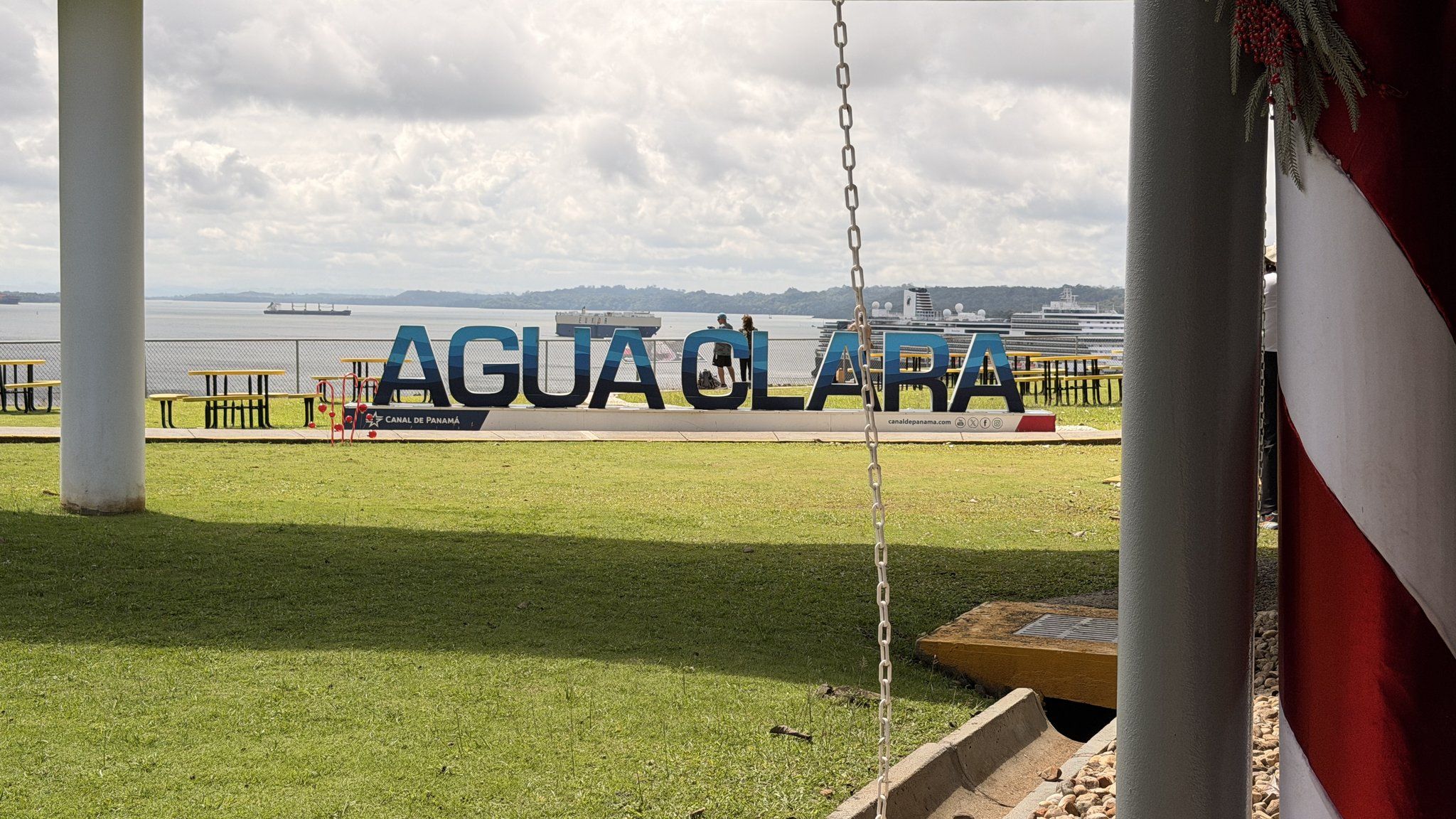
Published June 2026
A Panama Canal transit is one of those bucket list cruise experiences that sounds incredible on paper: your ship sails through one of the greatest engineering achievements in human history, passing from one ocean to another through a system of massive locks carved out of the jungle over a century ago. And it is incredible. But it is also slow, methodical, and very, very long. If you go in expecting a dramatic, edge-of-your-seat moment, you will be disappointed. If you go in ready to watch something genuinely fascinating unfold over an entire day, you will love it.
I experienced a partial Panama Canal transit on Holland America Line's MS Rotterdam as part of a Caribbean itinerary that also included stops at Half Moon Cay, Falmouth, Jamaica, Limon, Costa Rica, Colon, Panama, and Cartagena, Colombia. The canal transit was the centerpiece of the itinerary, and it delivered, just not in the way I expected.
This guide covers everything I wish someone had told me before my transit: what it actually looks like, how the locks work (explained simply), whether a balcony is worth it, what to expect hour by hour, and how to make the most of a day that is fascinating but requires patience.
- It's an engineering experience, not an adrenaline one. Go in expecting a slow, fascinating, all-day event.
- Book a balcony if the canal is your main reason for the cruise. This is the one itinerary where cabin choice really matters.
- Partial vs. full: a partial transit (roundtrip from Florida) still gives you the locks, the lake, and the engineering. A full transit crosses ocean to ocean.
- Narration makes it. Holland America, Princess, and several luxury lines do onboard narration well.
- Set your own alarm. Lock-entry announcements don't always reach every stateroom.
- Want the dramatic original locks? Look for smaller ships (roughly 2,000 passengers or fewer).
- Partial vs. Full Panama Canal Transit
- What a Transit Actually Feels Like
- How the Locks Work (Explained Simply)
- Behind the Scenes: How Ships Navigate the Canal
- Is a Balcony Worth It?
- Onboard Narration
- Getting Off Your Ship During a Transit
- Common Ports on Panama Canal Itineraries
- Tips for Your First Transit
- How Long Is a Panama Canal Cruise?
- How Much Does It Cost?
- Best Time of Year
- Where Do Cruises Depart From?
- Which Side of the Ship Is Best?
- Old Locks vs. New Locks
- Eastbound vs. Westbound
- What to Pack
- Fun Facts About the Panama Canal
- Best Cruise Lines for a Transit
- Is a Panama Canal Cruise Worth It?
- Panama Canal Cruise FAQs
Partial vs. Full Panama Canal Transit on a Cruise
What's the Difference Between a Partial and Full Canal Transit?
A full Panama Canal transit takes your ship from one ocean to the other, passing through all three sets of locks (Gatun, Pedro Miguel, and Miraflores) and across Gatun Lake. It takes 8 to 10 hours, and your ship enters on one coast and exits on the other. Full transits are usually part of longer repositioning cruises that start on the East Coast (Fort Lauderdale, Miami) and end on the West Coast (San Diego, Los Angeles, Seattle), or vice versa. These are typically 10 to 21 day sailings.
A partial transit does not go all the way through. Your ship enters the canal, transits one or two sets of locks, crosses Gatun Lake, and then turns around and exits the same side it entered. Many Caribbean itineraries offer partial transits, and that's what I did on the Rotterdam. We entered from the Atlantic side, went through the old Gatun Locks, navigated Gatun Lake, and then exited back out. Passengers who booked excursions (including me) tendered off the ship via the ship's lifeboats while on Gatun Lake, then were bused to attractions before meeting the ship at the Colon cruise port.
Both experiences give you the core of what makes the Panama Canal special: watching your ship rise (or lower) through the lock chambers. A full transit just gives you more of it, plus the added drama of actually switching oceans. If a full transit is available on an itinerary you like, go for it. But don't feel like a partial transit is a lesser experience. It's not. You get the locks, the lake, and the engineering. That's the whole show.
What a Panama Canal Transit Actually Feels Like on a Cruise Ship
Setting Expectations for the Panama Canal Experience
The biggest thing I want people to understand is that nothing about the Panama Canal happens quickly. There is no big reveal. No rush. No sudden thrill. Instead, the experience unfolds over the course of an entire day. You are watching a massive cruise ship move inches at a time through an engineered system that has been refined for over a century.
Our captain gave us estimated time windows for when we would enter each set of locks, but those times were flexible. Roughly 38 vessels transit the canal per day, and traffic dictates everything. Even though transits are scheduled, things can run early or late depending on the day.
We were awakened before 7 AM to be notified that we were beginning entry into the first lock. One thing I noticed immediately: captain announcements about lock entry were not consistently broadcast into all staterooms. If you were in an inside cabin and not already awake, you could easily miss key moments without even knowing it. Set your own alarm.
Pro Tip
Set your own alarm. Captain announcements about lock entry were not consistently broadcast into all staterooms on my sailing. If you're in an inside cabin, set an alarm for at least 30 minutes before the first scheduled lock entry, and check the daily newsletter the night before for estimated times.
The Visual Transformation Inside the Locks
This was the most fascinating part for me. When you first enter a lock, the walls and land beside you feel towering and high above. As the water slowly rises, those same features gradually come down to eye level. And then, you're looking down at them instead. You go from feeling small and enclosed to suddenly towering above the same walls that felt massive just moments earlier.
It is not fast. It takes roughly 12 minutes for the water to rise in each chamber, and about 8 minutes for the lock gates to close behind your ship. But watching that transformation in real time is genuinely fascinating. As a nerd who loves understanding how things work, I found myself stepping onto my balcony over and over just to watch the water level change relative to the structures around us.
Actual Transit Timing from My Panama Canal Cruise
Here were the approximate times from our partial transit day on the Rotterdam:
- 6:00 AM: enter the first lock, exit around 6:30 AM.
- 7:30 AM: enter the second lock, exit around 9:45 AM.
- 1:15 PM: enter a lock in the return direction, exit around 3:30 PM.
That's an all-day event with long stretches between locks. If you're imagining a quick, cinematic sequence, reset your expectations now. Bring a book, grab coffee, and enjoy the slow pace. The Panama Canal rewards patience, not urgency.
How the Panama Canal Locks Work (Explained Simply)
What Is a Canal Lock and Why Does It Matter?
Before this cruise, I honestly did not fully understand what a lock was. I had heard the word, but I could not have explained it clearly. So if you're in the same boat (literally), here's the simple version.
A lock is a giant water-filled chamber that raises or lowers ships by changing the water level around them. Your ship floats into the lock. Massive gates close behind it. Water flows in (or out) by gravity, not pumps, causing the water level to rise or fall. As the water level changes, the ship rises or lowers with it. The ship is never mechanically lifted. It floats the entire time.
In the Panama Canal, ships are raised a total of about 85 feet to reach Gatun Lake, one of the largest artificial lakes in the world. This happens in stages, roughly 29 feet per chamber. The process is slow and smooth. You do not feel the ship moving. What you notice is your surroundings changing around you.
Old Gatun Locks vs. New Agua Clara Locks
The Atlantic side of the canal has two sets of locks: the original Gatun Locks (operational since 1914) and the newer Agua Clara Locks (opened in 2016 as part of the canal expansion). The new locks are wider and deeper, built to accommodate massive Neo-Panamax container ships that carry up to 12,000 containers, compared to 5,000 in the original locks.
On our Rotterdam transit, we went through the old Gatun Locks. Later that day, I visited the Agua Clara Visitor Center from land and watched container ships transit the new locks from the viewing platforms. Seeing both in one day really drove home the scale difference and how the canal has evolved over more than a century. I cover the land-based Agua Clara visit in my Colon cruise port guide.
Behind the Scenes: How Ships Navigate the Panama Canal
Panama Canal Pilots, Tugboats, and Operations
During the transit, three Panama Canal pilots boarded our ship to assist with navigation. This is standard. No cruise ship captain navigates the canal alone. Hybrid-powered tugboats kept our ship centered in the locks, and line handlers were positioned on land along the lock walls for additional control if needed.
Some other details from the narrator that stuck with me: about 60% of the water used in the locks is recycled into reuse chambers, with the rest flowing out to the ocean. Gatun Lake was the largest artificial lake in the world when it was created by damming the Chagres River. The entire canal required excavation of roughly 235 million tons of earth. And here's a fact that catches everyone off guard: the canal runs roughly north to south, not east to west, because of how the isthmus of Panama curves. The sun rises over the Pacific and sets over the Atlantic in the Canal Zone.
The Puente Atlantico Bridge Over the Panama Canal
We passed under the Puente Atlantico, a major bridge completed in 2019. It exists because the first set of locks is almost always in use during busy morning transit hours, and when lock gates close, they can function as road crossings for traffic. The bridge solves the problem of traffic being stuck waiting for ships to clear the locks. Passing underneath it really emphasized how the canal isn't just a tourist attraction. It's deeply integrated into everyday life and infrastructure in Panama.
Is a Balcony Worth It on a Panama Canal Cruise?
I'm going to be very direct about this: if you are booking a cruise specifically for the Panama Canal transit, it is absolutely worth paying extra for an oceanview or balcony stateroom. This is the one itinerary where cabin choice makes a real difference in your experience.
I had a balcony, and it changed everything. During the long transit day, I could step outside whenever I wanted, even casually in pajamas, and just watch what was happening. No crowds. No jockeying for space at the railing. No holding a phone up over someone else's head. The transit lasts all day, and being able to dip in and out of it from my own private space made it infinitely more enjoyable.
For the best views, forward or aft balconies are ideal because you can see the ship entering and exiting the locks more clearly. Side balconies still give you a solid experience. Passengers without balconies tended to gather on the forward and aft open decks, which worked fine, but it was crowded during the prime lock entry moments.
If the budget is tight and a balcony is a stretch, an oceanview cabin is the next best option. You won't have the step-outside freedom, but you can at least watch through your window. An inside cabin on a canal transit means you're relying entirely on public deck space, and you'll need to be proactive about getting up early and claiming a good spot. If you're still deciding on your cruise, I can help. Book a trip with my travel agency and I'll make sure you get the right cabin for the experience.
Onboard Narration During a Panama Canal Transit
One thing Holland America did exceptionally well was live narration. They had a Panama Canal expert onboard who narrated the entire transit in real time. She explained what was happening at each stage, shared historical context, engineering details, and little facts that helped the hours pass more quickly.
The narration was broadcast on a dedicated TV channel, which was perfect. I kept it on in my stateroom, listened along, and then stepped outside onto the balcony to watch what she was describing. That back and forth between listening and watching made the experience much richer than it would have been otherwise.
Without narration, I think the transit could feel repetitive for a lot of people. You're essentially watching water levels change for hours. The narration gives it context, story, and significance. Not every cruise line does this equally well, so if narration matters to you, it's worth researching which line provides the best educational experience. Holland America, Princess, and some luxury lines are known for investing in onboard enrichment.
Getting Off Your Cruise Ship During a Panama Canal Transit
How Tendering Works on a Partial Transit
You cannot disembark while your ship is actively in the locks. Once the ship reaches Gatun Lake, tendering becomes possible. On our sailing, the only way to leave the ship was by booking a cruise line excursion. Normally, I prefer independent excursions over cruise line excursions, but this was a case where the logistics made that impractical.
The tender boats were actually the ship's lifeboats, which transported us across Gatun Lake to a small pier. From there, we boarded an excursion bus with about 40 other cruisers. The timing worked out well: our excursion wasn't too early, so I still got to experience the locks in the morning before leaving the ship.
One piece of advice: if your ship is doing a partial transit, don't feel obligated to stay onboard for the entire thing. Experience one full lock cycle and the rising water, absorb the engineering, and then go explore on land. You can read about the land-based excursion options in my Colon cruise port guide, which covers the Agua Clara Visitor Center, Fort San Lorenzo, Portobelo, and more.
Common Ports on Panama Canal Cruise Itineraries
Panama Canal itineraries vary widely depending on whether you're doing a partial transit (roundtrip from Florida) or a full transit (coast to coast). But most itineraries share some common port calls that are worth knowing about in advance. Here's what to expect on a typical Panama Canal sailing.
If you're sailing with Holland America, many Panama Canal itineraries include a stop at Half Moon Cay, their private island in the Bahamas. It's a gorgeous beach day with calm, clear water. A completely different vibe from the canal day, and a nice contrast in the itinerary. If your sailing includes it, read my Half Moon Cay cruise port guide before you go.
Falmouth, Jamaica is another frequent stop on Caribbean Panama Canal itineraries. Falmouth is a compact port with great excursion options (Dunn's River Falls, Martha Brae rafting, luminous lagoon tours). It's one of the more manageable Jamaican ports for cruisers. Check out my Falmouth cruise port guide for the full breakdown.
On the Central American stretch, Limon, Costa Rica is a common call. The port town itself is small, but the excursions into the rainforest and to the canals of Tortuguero are excellent. My Limon cruise port guide covers everything from safety to the best things to do.
Colon, Panama is where most ships dock before or after the canal transit. As I cover in my Colon cruise port guide, it's not a port for wandering. The value is entirely in the excursions: canal locks from land, Fort San Lorenzo, Portobelo, and the rainforest.
Cartagena, Colombia is one of the highlights of any Panama Canal itinerary, especially on full transits and eastbound sailings. The walled Old City is a UNESCO World Heritage Site with colonial architecture, incredible food, and a completely different energy from anywhere else on the itinerary. If your cruise stops in Cartagena, plan to spend the whole day exploring, and read my Cartagena cruise port guide.
Full transit sailings that go coast to coast often add Pacific-side ports like Puntarenas (Costa Rica), Huatulco (Mexico), Puerto Vallarta, and Cabo San Lucas. Some itineraries also include Aruba on the Caribbean side.
Tips for Your First Panama Canal Cruise Transit
Set your own alarm. Don't rely on captain announcements reaching your cabin. We were awakened before 7 AM, but announcements weren't consistently broadcast to all staterooms. If you're in an inside cabin, set an alarm for at least 30 minutes before the first scheduled lock entry. Check the ship's daily newsletter the night before for estimated times.
Watch from multiple vantage points. Start from your balcony (if you have one), then head to the upper decks for a wider perspective. The bow gives you a head-on view of the lock gates. The aft shows you the gates closing behind the ship. Different angles reveal different parts of the experience.
Tune into the narration channel. If your cruise line offers live narration (Holland America, Princess, and several luxury lines typically do), keep it on in your cabin. The context and history make the slow pace significantly more engaging. Without it, you're watching water levels change for hours.
Don't try to watch the whole thing. The transit takes all day. You don't need to be glued to the railing for 10 hours. Watch the first lock entry closely, step away for breakfast, come back for the second lock, take a nap, and return for the afternoon. The best approach is casual engagement, not marathon viewing.
Bring binoculars. If you have a pair, they're useful for reading the names on container ships passing through the adjacent locks and spotting wildlife along the lakeshore. You can find travel binoculars and other cruise gear in my Amazon storefront.
Book your cabin wisely. Balcony is ideal, forward or aft even better. Oceanview is a solid backup. Inside cabins work but require more effort. If you need help choosing, book with my travel agency and I'll walk you through the options.
Protect yourself. You're spending time on open decks in tropical sun. Sunscreen is a must, and so is water. The viewing platforms at the locks (if you visit from land) have limited shade. Pick up sun protection and cruise essentials from my Amazon storefront, and make sure you have travel insurance locked in before you leave.
If you're new to cruising entirely and want a complete primer before your trip, my Ultimate Guide to Cruising covers everything from booking to disembarkation. And if you're still in the packing phase, grab my free cruise packing list and planning guide before you go.
How Long Is a Panama Canal Cruise?
Panama Canal cruises are longer than a typical Caribbean sailing. Partial transits (roundtrip from Florida) usually run 10 to 14 days. Full transits (coast to coast) are typically 14 to 21 days, though some itineraries stretch beyond three weeks if they include extra Pacific-side ports. A handful of cruise lines also offer shorter 7 to 9 day options that visit the canal area without a full transit.
One thing that catches people off guard is the number of sea days. If you're sailing between Fort Lauderdale and San Diego (or vice versa), expect around 6 to 8 sea days. The canal transit itself counts as one of those, but the stretches of open water between ports, especially along the Pacific coast of Central America and Mexico, can add several consecutive days at sea. If you love sea days, this is paradise. If you get restless without port stops, check the itinerary carefully before booking.
Longer cruises attract a slightly different crowd than 7-day Caribbean sailings. The pace is more relaxed, the demographic tends a bit older, and people are generally less focused on nightlife and more interested in enrichment and port experiences. I found this vibe refreshing on the Rotterdam.
How Much Does a Panama Canal Cruise Cost?
Pricing varies widely depending on cruise line, cabin type, itinerary length, and time of year. As a rough guide: inside cabins on mainstream lines (Carnival, Norwegian, Holland America) start around $1,000 to $1,500 per person for shorter partial transits. Full transit sailings of 14 to 16 days typically start at $1,500 to $2,500 per person for inside cabins. Balcony cabins (which I strongly recommend for the transit day) run $2,000 to $4,000+ per person.
Luxury and premium lines like Princess, Celebrity, Windstar, and Seabourn cost more, but often include perks like specialty dining, drinks, and smaller ship experiences. Windstar's 7-day partial transit starts around $2,600 per person. All-inclusive luxury options can run $5,000+ per person.
Budget tip: repositioning cruises (when ships move between Alaska and Caribbean seasons in spring and fall) often offer the best value for full transits. These sailings need to move the ship regardless, so pricing can be surprisingly competitive. If you want help finding the best deal for your budget, book with my travel agency and I'll find you the right sailing.
Best Time of Year for a Panama Canal Cruise
The Panama Canal cruise season runs from October through April, with peak sailings from December through March. This overlaps with Panama's dry season (December to April), which means less rain, lower humidity, and more comfortable conditions for both the transit and port excursions.
January and February are the driest months and generally the most pleasant for weather. The wet season (May to November) brings heavy afternoon downpours, though temperatures stay warm year-round (77 to 86°F). If you're cruising during the wet season, you'll still enjoy the transit, but plan for rain gear on excursion days.
Shoulder season sailings in October and November or late March and April can offer better pricing with still-decent weather. The repositioning cruises I mentioned above typically happen in April and May (heading to Alaska) and September and October (returning to the Caribbean).
Where Do Panama Canal Cruises Depart From?
Most Panama Canal cruises depart from East Coast ports: Fort Lauderdale and Miami are the most common, with some sailings from Tampa, Galveston, and New Orleans. For westbound full transits, these ships end in San Diego, Los Angeles, San Francisco, Seattle, or Vancouver.
Eastbound full transits flip that route, departing from West Coast cities and ending in Florida. Some passengers prefer starting on the West Coast so the longer flight comes at the beginning of the trip rather than the end. You gain hours heading eastbound as well, which is a small but nice perk.
A few cruise lines also homeport in Panama itself. Norwegian Cruise Line has operated out of Colon (Atlantic side) and Fuerte Amador (Pacific side, near Panama City) for roundtrip Panama Canal sailings. This is a niche option but worth knowing about if you want a shorter, canal-focused itinerary. For help choosing the right departure port, reach out to my travel agency.
Which Side of the Ship Is Best for a Panama Canal Cruise?
This is one of the most common questions, and the honest answer is: it doesn't matter as much as you'd think. The canal is narrow enough that you get good views from both sides during lock operations. The real action happens at the bow (front) and stern (back) of the ship, where you can see the lock gates opening and closing.
That said, if you're picking a side, port side (left when facing forward) gives slightly better views on a westbound transit. But during the transit day, you'll have plenty of time to walk to different vantage points. The upper decks, the bow area (many ships open this for canal day), and your balcony will all give you different perspectives. Don't stress about picking the "perfect" side. Pick a cabin you can afford and enjoy the show from multiple locations throughout the day.
The more important cabin decision is vertical position. Lower balconies actually put you closer to the lock walls and water level, making the rising water effect more dramatic. Higher decks give you a wider panoramic view. Both are great.
Old Locks vs. New Locks: Which Is Better?
This is a bigger deal than most people realize, and it's something I didn't research before my sailing. The Panama Canal has two sets of locks on each side: the original locks (1914) and the expansion locks (2016). Which one your ship uses depends entirely on the size of the vessel.
Smaller and mid-sized ships (roughly 2,000 passengers or fewer) typically transit the original locks. These are the iconic, historic locks where the ship fits with just a few feet of clearance on each side. It's dramatic and visually thrilling because the walls feel close enough to touch. The original locks also use "mules" (electric locomotives on tracks) to guide ships, which is a distinctive part of the experience.
Larger ships (Neo-Panamax class) go through the newer expansion locks, which are wider and use tugboats instead of mules. The transit is still impressive, but the wider chambers mean less of that dramatic tight-fit sensation. On my Rotterdam transit, we used the old Gatun Locks, and I'm glad we did. The narrow clearance made the experience feel more visceral and historic.
If the original locks are important to you (and most experienced cruisers agree they're the more interesting experience), look for ships under 2,000 passengers. Lines like Holland America (Vista Class), Oceania, Windstar, Seabourn, Cunard (Queen Victoria, Queen Elizabeth), and Azamara are good bets. Check recent passenger reports on Cruise Critic or Facebook groups to confirm which locks a specific ship used.
Pro Tip
If you want the dramatic, tight-fit experience of the original 1914 locks, book a smaller ship (roughly 2,000 passengers or fewer). Larger Neo-Panamax ships go through the wider 2016 expansion locks, which are impressive but lose that close-enough-to-touch sensation.
Eastbound vs. Westbound: Which Direction?
The canal transit itself is the same in either direction, so you're not missing anything by choosing one over the other. The difference comes down to logistics, itinerary, and personal preference.
Westbound (Atlantic to Pacific) is more common. Most sailings depart Fort Lauderdale or Miami, transit the canal, and end on the West Coast. You'll typically hit Caribbean ports first (Half Moon Cay, Falmouth, Cartagena), transit the canal, and then visit Pacific-side ports (Costa Rica, Mexico) before ending in San Diego, LA, or Seattle.
Eastbound (Pacific to Atlantic) is less common but has a practical advantage: you gain hours traveling east, and some passengers prefer having the longer flight at the start of the trip rather than the end. Eastbound sailings often include Mexican Riviera ports, Costa Rica, the canal transit, and finish with Caribbean stops or head straight to Florida.
The biggest factor is where you live and where you'd prefer to fly. If you're on the East Coast, westbound is more convenient to start. If you're on the West Coast, eastbound saves you a cross-country flight at the beginning.
What to Pack for a Panama Canal Cruise
Panama Canal cruises are longer than a typical 7-day sailing, so packing smart matters more than usual. Most ships offer laundry service (and some have self-serve laundromats), which means you don't need to pack two weeks' worth of clothes. I'd plan for about one week's worth and use laundry services mid-trip.
For the transit day specifically, you'll want comfortable clothes you can layer (mornings can be cool on deck, afternoons get hot). A hat and sunscreen are essential because you'll be in direct sun on the upper decks, and the reflection off the water makes it worse than you'd expect. Binoculars are genuinely useful for reading ship names on passing vessels and spotting wildlife along the lakeshore.
For port days in Central America and the Caribbean, pack light, breathable clothing, closed-toe shoes for any jungle or fort excursions, and bug spray. A packable rain jacket is a must regardless of season. I wore flip flops on a nature trail in Panama and while I survived, I don't recommend it.
For a full packing breakdown, grab my free cruise packing list and planning guide. I also have my favorite travel gear (including binoculars, sunscreen, and packing cubes) in my Amazon storefront.
Fun Facts About the Panama Canal You'll Want to Know Before Your Cruise
The Panama Canal is often called one of the seven modern wonders of the world. Before it opened in 1914, a journey between the Atlantic and Pacific oceans could take three months around the tip of South America. Today, roughly 38 ships transit the canal every day.
The canal runs roughly north to south, not east to west. Panama's isthmus curves in such a way that the Atlantic (Caribbean) entrance is actually northwest of the Pacific entrance. That means the sun rises over the Pacific and sets over the Atlantic in the Canal Zone. It sounds wrong until you look at a map.
Construction required excavation of approximately 235 million tons of earth. The canal was initially a French project led by Ferdinand de Lesseps (who built the Suez Canal), but it failed catastrophically due to disease and engineering challenges. The United States took over in 1904 and completed it in 1914. The U.S. operated the canal until 1999, when it was transferred to Panama per the 1977 Carter-Torrijos Treaty.
In February 2026, Disney Adventure became the largest passenger ship by gross tonnage (208,000 GT) to ever transit the canal. The 2016 expansion locks can now accommodate about 96% of the world's container ship fleet.
Best Cruise Lines for a Panama Canal Transit
Most major cruise lines offer Panama Canal itineraries, but the experience varies. Holland America Line is one of the most established operators on this route, with a long history of canal transits and strong onboard narration programs. They also offer stops at their private island, Half Moon Cay, on many Panama Canal sailings. I sailed on HAL's Rotterdam and was impressed with the educational programming.
Princess Cruises is another top choice and is the most popular cruise line for canal transits. They offer narration from the bridge, which gives you a unique perspective from the officers navigating the ship. Norwegian Cruise Line has homeport operations out of Colon, Panama, making them a solid choice for roundtrip Panama Canal sailings. Royal Caribbean, Celebrity, Carnival, and luxury lines like Seabourn and Windstar also operate canal itineraries.
The key differentiators are narration quality, itinerary length (more days means more port calls), and cabin options. If the canal transit is the main event, prioritize a line with strong enrichment programming and book a balcony. For more help deciding, read my guide on the pros and cons of cruise line excursions versus independent ones, or reach out to my travel agency for personalized recommendations.
Is a Panama Canal Cruise Worth It?
Yes, with the right expectations. The Panama Canal is not an adrenaline experience. It's an engineering experience. If you're the kind of person who finds it fascinating to watch a 90,000-ton ship rise 85 feet through nothing but water and gravity, you will absolutely love this. If you need constant stimulation and dramatic scenery changes, you might find the pacing frustrating.
For me, it landed somewhere in the middle. I'm glad I did it. The locks were genuinely fascinating, especially watching the water rise from my balcony and then later seeing the same process from land. The narrator made the experience significantly better. And the itinerary ports (Limon, Colon, Falmouth, Cartagena) added real variety to the sailing.
Would I do a full transit next time? Probably. Having experienced a partial transit, I'm curious to see the Pacific-side Miraflores Locks and the Pedro Miguel Locks. A coast-to-coast crossing has a sense of accomplishment that a partial transit can't quite replicate. But if a partial transit is what fits your schedule and budget, don't hesitate. You'll still experience the core of what makes the Panama Canal special.
If you want help planning a Panama Canal cruise, book with my travel agency. I'll help you pick the right cruise line, the right cabin, and the right itinerary based on what matters most to you.
Related: watch my Panama Canal cruise videos on YouTube.
Panama Canal Cruise FAQs
What's the difference between a partial and full Panama Canal transit?
A full transit takes your ship from one ocean to the other through all three sets of locks and across Gatun Lake, usually as part of a 10 to 21 day coast-to-coast repositioning cruise. A partial transit enters the canal, goes through one or two sets of locks and across Gatun Lake, then turns around and exits the same side, common on roundtrip Caribbean itineraries from Florida. Both give you the locks, the lake, and the engineering.
Is a balcony worth it for a Panama Canal cruise?
If the canal transit is your main reason for the cruise, yes. It's the one itinerary where cabin choice makes a real difference. A balcony lets you step in and out all day without fighting crowds for railing space. Forward or aft balconies give the best lock views; an oceanview cabin is the next best option, and an inside cabin means relying entirely on public decks.
How long does a Panama Canal transit take?
A full transit takes about 8 to 10 hours from one ocean to the other. A partial transit is also an all-day event with long stretches between locks. The water takes roughly 12 minutes to rise in each chamber and about 8 minutes for the gates to close, so the whole experience is slow and methodical rather than quick.
Will my ship use the old locks or the new expansion locks?
It depends on the size of the ship. Smaller and mid-sized ships (roughly 2,000 passengers or fewer) typically use the original 1914 locks, where the ship fits with just a few feet of clearance and electric "mules" guide it through. Larger Neo-Panamax ships use the wider 2016 expansion locks with tugboats. Most experienced cruisers find the original locks the more dramatic experience.
Is a Panama Canal cruise worth it?
Yes, with the right expectations. It's an engineering experience, not an adrenaline one. If you find it fascinating to watch a massive ship rise 85 feet through nothing but water and gravity, you'll love it. Onboard narration makes the slow pace far more engaging, and the surrounding port stops add variety. If you need constant stimulation, the pacing may feel slow.
Disclosure: This post contains affiliate links, which means I may earn a small commission if you book or buy through them, at no extra cost to you.
BABY, LET'S CRUISE...
Let us help you plan the cruise (or trip) of a lifetime!
Subscribe to my Cruiseletter
Get juicy cruise info, insider tips, and FREE port guides, delivered straight to your inbox. Plus, you'll get my FREE Cruise Packing List & Planner, and I promise to never spam you.
By submitting this form, you're agreeing to receive emails from Professor Melissa. Don't worry, your info is safe with me. We'll never share or sell it. You can also unsubscribe at any time.