Cartagena Cruise Port Guide: Old Town, Fortress & More
Jun 04, 2026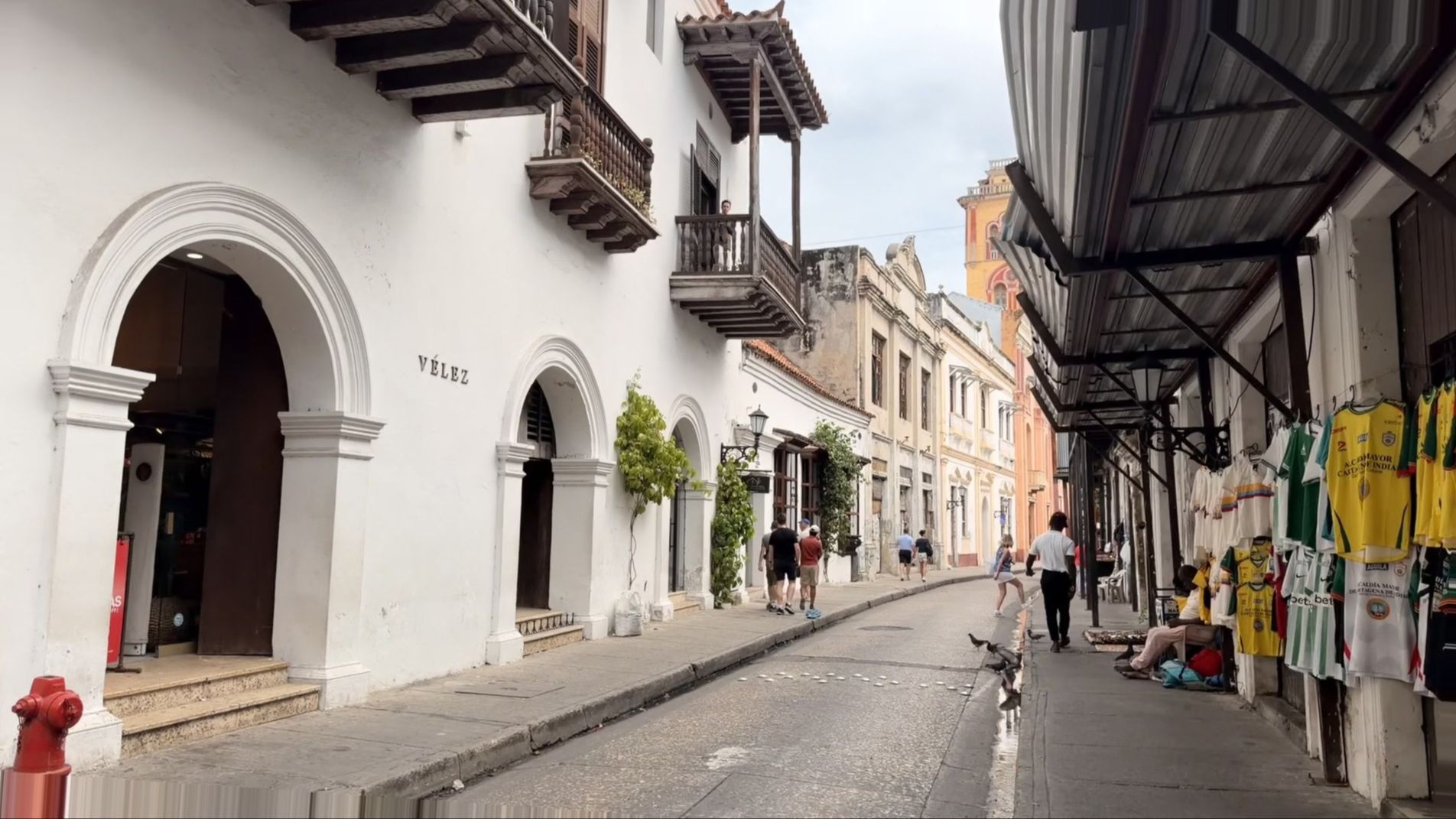
Published June 2026
The Cartagena cruise port in Colombia is one of the most historically rich stops you'll find on any Caribbean or Panama Canal itinerary. Founded in 1533, this UNESCO World Heritage city spent centuries as the Spanish Empire's most important port in the Americas, and the pirates, battles, and fortresses it left behind are everywhere you look. If you're pulling into Cartagena on a cruise, you're in for a port day that's heavy on history, color, and character.
I visited Cartagena aboard Holland America Line's Rotterdam, and what surprised me most wasn't the stunning Walled City or the massive fortress (though both were incredible). It was the cruise terminal itself. Right there at the port, tucked behind the shops, is an eco park filled with peacocks, parrots, toucans, flamingos, iguanas, monkeys, and all kinds of exotic wildlife roaming through lush tropical gardens. Most cruisers walk right past it on their way to a taxi. I almost did too, and I'm so glad I didn't, because it ended up being one of the highlights of my day.
In this Cartagena cruise port guide, I'll walk you through everything you need to know for your port day, from transportation and safety tips to the Old Town, Castillo San Felipe, the best food I tried (and the food I didn't love), where to find Colombia's famous emeralds, and why you absolutely should not skip the port's eco park on your way back to the ship.
Cartagena is a frequent stop on Panama Canal cruise itineraries, often paired with Colon, Panama and Limon, Costa Rica. If your sailing also includes a canal transit, my Panama Canal cruise guide breaks down exactly what to expect onboard.
- Bottom line: Cartagena is a history-rich UNESCO port, not a beach port. Plan your day around the Old Town and the fortress.
- Getting there: take a taxi or an excursion. I do not recommend walking from the port to Old Town.
- Top sights: the Walled City (Ciudad Amurallada) and Castillo San Felipe de Barajas, the largest Spanish fortress in the Americas.
- Don't miss: the free Port Oasis Eco Park right at the terminal. Most cruisers walk right past it.
- Vendors: persistent here. A polite but firm "No, gracias" is your best friend.
- Best bite: a fresh squeezed citrus juice from a street vendor. It was my favorite food moment of the day.
- Cartagena Cruise Port Location and Map
- About the Cartagena Cruise Port
- Cartagena Cruise Port at a Glance
- Getting Around Cartagena from the Cruise Port
- Currency, Language, and Tips
- Fun Fact: The Battle That Saved a City
- Top Things to Do Near the Cartagena Cruise Port
- Food and Drink Near the Cartagena Cruise Port
- Emeralds and Shopping in Cartagena
- Excursions from the Cartagena Cruise Port
- Fun Fact: The Palenqueras and Africa's Legacy
- Beaches Near the Cartagena Cruise Port
- Cartagena Cruise Ship Schedule
- Climate and What to Wear
- Time Zone at the Cartagena Cruise Port
- Sample Port Day Itineraries
- Cartagena Cruise Port FAQs
Cartagena Cruise Port Location and Map
Where Your Ship Docks in Cartagena
The Cartagena cruise port is located in the Manga neighborhood, an industrial area about 3 miles (5 km) from the historic Old Town. The official address is Cl. 28 #24-39, Manga, Cartagena de Indias. Ships dock at one of two dedicated cruise piers within the larger commercial port, which also handles container shipping. You'll see containers and industrial equipment in the background, but the cruise terminal area itself is surprisingly well-maintained and charming.
From the pier to the terminal building is about a 5-minute walk (roughly 500 meters), and the port usually runs free shuttle buses to cover that distance. The walk is flat and shaded in parts, but in Cartagena's heat, the shuttle is welcome. All passengers exit through the same terminal building, which is where you'll find shops, cafes, Wi-Fi, restrooms, and the taxi stand.
About the Cartagena Cruise Port
Terminal Facilities at the Cartagena Cruise Port
The Cartagena de Indias Cruise Terminal serves 34 cruise lines and handles 97% of all cruise passengers arriving in Colombia by sea. It can accommodate up to five ships simultaneously and over 10,000 passengers per day. The terminal building has free Wi-Fi, an ATM, restrooms, a Juan Valdez coffee shop, and a large indoor market selling handicrafts, emerald jewelry, leather goods, Colombian coffee, cigars, and souvenirs. The souvenir shops here are more expensive than what you'll find in the city, but the quality is decent.
Port Oasis Eco Park at the Cartagena Cruise Terminal
Here's the part most cruisers completely miss: the Port Oasis Eco Park. As you walk between the pier and the terminal building, you pass through (or, more accurately, right past) a lush tropical garden that's home to an incredible collection of wildlife. I'm talking peacocks, parrots, toucans, flamingos, iguanas, monkeys, and some unusual-looking animals roaming freely through landscaped gardens, ponds, and shaded terraces. There's even a Swan Lake.
I'll be honest, I almost missed it entirely on my way out. Like most people, I was focused on getting to a taxi and heading to Old Town. It wasn't until I was walking back to the ship at the end of the day that I actually stopped to explore the eco park, and it ended up being a highlight. The gardens are calm, lush, and a genuinely relaxing way to end a hot day of sightseeing in the city. My advice: don't rush past it. Whether you explore it on the way out or save it for the walk back, give yourself at least 20 to 30 minutes here. It's free, it's beautiful, and it's right there.
Pro Tip
Save the Port Oasis Eco Park for the walk back to the ship. After a hot day in the Old Town, those shaded gardens are a calm, free, and genuinely relaxing way to end your port day, and almost everyone walks right past them.
Cartagena Cruise Port at a Glance
Here's a quick reference for what to expect at the Cartagena cruise port.
- Cruise piers: 2 dedicated (within a larger commercial port)
- Max ships: 5 simultaneously
- Capacity: 10,000+ passengers per day
- Distance to Old Town: about 3 miles (5 km), 15 to 20 minutes by taxi
- Terminal amenities: free Wi-Fi, ATM, restrooms, coffee shop, souvenir market
- Shuttle: free shuttle from pier to terminal (about 500m)
- Eco park: yes (free, within the terminal grounds)
- Tender port: no
- Currency: Colombian Peso (COP); USD accepted in most tourist areas
- Language: Spanish (some English in tourist areas)
- Taxi to Old Town: about $8 to $10 per taxi (not per person)
- Walkable to attractions: no (taxi or excursion required)
Getting Around Cartagena from the Cruise Port
Transportation Options at the Cartagena Cruise Port
Let me be upfront about this: I do not recommend walking from the Cartagena cruise port to Old Town, and I also don't recommend exploring on your own outside the tourist areas. The walk from the port to the Walled City takes about 45 minutes through an industrial and residential neighborhood that is not tourist-friendly, not particularly safe, and not shaded. The area immediately outside the port gates felt gritty and uninviting to me, and this is coming from someone who has visited dozens of cruise ports around the world. For Cartagena, I strongly suggest either booking a cruise line excursion or taking a taxi directly to the Old Town.
Pro Tip
Do not try to walk from the port to the Old Town. It is about 45 minutes through an industrial, unshaded area that did not feel tourist-friendly. A taxi is cheap and takes only 15 to 20 minutes.
Taxis from the Cartagena Cruise Port
Taxis are the most common way cruisers get from the port to Old Town. There's a taxi stand right outside the terminal exit, and official prices are posted on a board. The official rate from the cruise port to the Old Town (Centro and Getsemani) is approximately 32,700 COP, which works out to roughly $8. In practice, expect to pay around $8 to $10 per taxi (not per person) for a one-way ride to the Old Town. Rates can creep up on busy cruise days when multiple ships are in port. Some drivers may ask $15 to $20, so knowing the official rate gives you negotiating power.
| Destination | Approximate fare |
|---|---|
| Port to Old Town (Clock Tower) | ~$8 to $10 per taxi |
| Port to Castillo San Felipe | ~$8 to $10 per taxi |
| Fortress to Old Town | ~$5 per taxi |
| Taxi hired by the hour | ~$20 to $25 |
| Hop-on hop-off bus | from ~$25 to $30 per person |
The official posted rate from the port to the Old Town is around 32,700 COP (roughly $8). Fares are per taxi (not per person) unless noted, so sharing makes sense. Agree on the price before you get in, and confirm current rates at the terminal taxi stand. You can pay in USD or COP, and rates rise on busy multi-ship days.
A few important taxi tips for Cartagena: always agree on the price before you get in, the fare is per taxi and not per person (so sharing makes sense), and you can pay in either USD or COP. Taxis can also be hired by the hour at roughly $20 to $25, which is worth considering if you want to combine Old Town with Castillo San Felipe without dealing with finding a second cab in the heat. The ride from the port to Old Town takes about 15 to 20 minutes depending on traffic. Most drivers drop you off near the Clock Tower (Torre del Reloj), which is the main entrance to the Walled City.
You'll notice different colored shirts at the taxi area: men in light blue shirts are port-authorized taxi drivers who generally speak some English, and men in red shirts are independent drivers. Licensed guides in white shirts also offer services here. I'd stick with the light blue or white shirts for a smoother experience.
Other Ways to Get Around Cartagena
Uber technically operates in Cartagena, but availability is limited and unreliable, especially near the cruise port. Taxis are the more dependable option. A hop-on hop-off bus is also available, with service from the port and around 12 to 16 stops including Old Town and Castillo San Felipe, with prices starting around $25 to $30. Once you're inside the Old Town, everything is walkable. The Walled City is compact, and exploring on foot is the best (and really only practical) way to see it. Just bring water and wear comfortable shoes, because the cobblestone streets and tropical heat can wear you out fast.
If you're new to how cruise port days work, I have a full breakdown in my port day guide that covers everything from disembarkation to getting back to the ship on time.
Currency, Language, and Tips for the Cartagena Cruise Port
Money and Payment in Cartagena
The local currency in Cartagena is the Colombian Peso (COP). As of early 2026, the exchange rate is roughly 4,000 to 4,200 COP to $1 USD, though this fluctuates, so check a current rate before your trip. The good news for cruisers is that US dollars are widely accepted in the main tourist areas, including taxis from the port, shops in Old Town, and most restaurants near the Walled City. That said, having some pesos on hand is useful for smaller purchases, street food vendors, and tipping. There's an ATM inside the cruise terminal if you need to withdraw cash.
Credit cards are accepted at most established restaurants and shops in the tourist areas, and contactless tap-to-pay works in many places. If you don't already have a travel credit card that waives foreign transaction fees, it's worth getting one before your trip. A card like this one will save you the 3% surcharge most banks add on international purchases.
Language and Communication in Cartagena
Spanish is the primary language in Cartagena, and unlike some other Caribbean cruise ports where English is widely spoken, you'll encounter less English here, especially outside the main tourist zones. Most taxi drivers at the port speak basic English (enough to confirm a destination and a price), and vendors in Old Town will know enough to make a sale, but don't expect fluent English conversations. I'd recommend downloading a translation app before your port day. It'll come in handy. If you speak any Spanish at all, even a few phrases, people here genuinely appreciate the effort.
Tipping and Service Charges in Cartagena
Tipping in Cartagena restaurants follows a standard practice: a 10% service charge (propina) is typically added to your bill automatically. You can decline it, but it's customary to leave it. For exceptional service, rounding up or adding a bit more is appreciated but not expected. For taxi drivers, tipping isn't standard, but rounding up to the nearest thousand pesos is a nice gesture.
Fun Fact: The Battle That Saved a City
Blas de Lezo and the 1741 Battle of Cartagena
As a nerd who always wants to learn things when traveling, this one absolutely fascinated me. In 1741, the British sent a massive fleet of 186 ships and roughly 27,000 troops to capture Cartagena de Indias. To put that in perspective, it was one of the largest naval expeditions in history, bigger than the Spanish Armada. The British commander, Admiral Edward Vernon, was so confident in victory that he sent word back to England, and commemorative medals were minted in London celebrating the British conquest of Cartagena. Before the battle was even over.
Defending the city was Spanish Admiral Blas de Lezo, a man who had already lost his left leg, his left eye, and his right arm in previous battles. The locals called him "Mediohombre," or half-man. With roughly 3,000 defenders, six ships, and Cartagena's fortifications (including the very Castillo San Felipe you can visit today), Blas de Lezo held off the British for 67 brutal days. The tropical heat, disease, and fierce resistance eventually broke the invasion. The British withdrew to Jamaica, having lost an estimated 18,000 men and 50 ships. Those commemorative victory medals? They became one of history's most embarrassing premature celebrations.
Blas de Lezo didn't survive long after the battle. He died of disease in September 1741. But his defense of Cartagena is considered one of the most extraordinary military victories in Spanish history, and you'll see his statue and legacy all over the city. The battle is a big part of why Castillo San Felipe de Barajas feels so significant when you visit. It's not just an old fort, it's the site of one of history's great underdog stories.
Top Things to Do Near the Cartagena Cruise Port
The Walled City (Ciudad Amurallada) in Cartagena
The Walled City is the main attraction in Cartagena, and for good reason. Built in the 16th century to protect the city from pirates, the massive stone walls still encircle the historic center, and walking through the main gate at the Clock Tower (Torre del Reloj) is like stepping into a different century. Inside, you'll find narrow cobblestone streets lined with colorful colonial buildings, flower-draped balconies, lively plazas, churches, museums, and more restaurants and shops than you can count.
Most walking tours and excursions start at the Clock Tower entrance and loop through the main plazas. Plaza de los Coches is the first square you'll hit inside the gate. It was historically the city's slave market, and today it's lined with arched storefronts selling local sweets. Plaza de Bolivar is the heart of the Old Town, a shaded park with fountains and a large statue of Simon Bolivar, the South American liberator. Plaza de San Pedro Claver, named after the priest known as the "Slave of the Slaves" for his ministry to enslaved Africans brought through Cartagena's port, is another major stop. The church and museum of San Pedro Claver are worth a visit if your excursion or walking route includes them.
I also spotted the statue of Jose Padilla, a naval hero from Colombia's independence era, while walking through the Old Town. There's history packed into virtually every block here.
A Word About Vendors in the Cartagena Old Town
I need to be honest about this, because it will affect your experience: the vendors in Cartagena's Old Town are aggressive. And I say this as someone who has visited cruise ports all over the world and normally doesn't get bothered by vendors, even assertive ones. Cartagena was next level. You will be approached constantly, with people selling hats, head wraps, fruit cups, drinks, snacks, and souvenirs. Women in traditional Afro-Colombian dress will pose for photos and then expect a tip (which is their livelihood, so that part is fine, just know it's coming). But the sheer persistence of the selling can wear on you, especially in the heat.
My advice: be polite but firm. A simple "No, gracias" should do it, though you may need to repeat it. Keep your belongings secure, and don't flash expensive jewelry or electronics. None of this should scare you away from visiting. The Walled City is absolutely worth exploring, but going in prepared will make it a much better experience.
Castillo San Felipe de Barajas Near the Cartagena Cruise Port
Castillo San Felipe de Barajas is the largest Spanish-built fortress in the Americas, and it sits on the Hill of San Lazaro about a 15-minute drive from the cruise port (or a short taxi ride from Old Town). Built beginning in 1536 and expanded over the next 150 years, this is the fortress that famously held off the British fleet in 1741. It's a UNESCO World Heritage Site, along with the rest of Cartagena's historic center.
Here's what you need to know for planning: the exterior of the fortress is free to explore. It's flat, wide, and photo-friendly, with great views of the city and the Caribbean. You can easily spend 20 to 30 minutes walking around the outside, snapping photos, and reading the historical markers. The interior requires paid admission and involves steep ramps, tunnels, and stairs, so it's not ideal for anyone with mobility concerns. Recent adult admission has run roughly $8 to $11, though prices change and entry has been free on certain days, so confirm at the gate. The tunnel system is impressive if you're up for it, but it's dark, narrow in places, and the incline is real.
One more thing about Castillo San Felipe: the vendors outside are extremely aggressive. Even more so than inside the Walled City, in my experience. You'll be swarmed with people selling hats, souvenirs, and drinks the moment you approach. There's also a chocolate shop across the street from the fort that markets itself as a museum. It's not. It's a retail store. You're welcome to browse, but go in knowing it's a sales pitch, not an educational experience.
Vintage Car Tours in the Cartagena Old Town
This was one of the unexpected highlights of my visit. While exploring Old Town during free time on my cruise excursion, I ended up hopping into a vintage car for a quick tour around the Walled City. These classic antique cars are parked around the Old Town and the drivers will negotiate a price for a short scenic ride through the colonial streets. I honestly don't remember exactly what I paid, but the prices are negotiable and from what I've seen, generally very reasonable.
The cruise lines do sell vintage car tours as official excursions, but you'll almost certainly pay less by arranging it directly in Old Town. It's a fun, photogenic experience and a nice break from walking in the heat. If you see one parked and available, I'd say go for it.
Getsemani Neighborhood Near the Cartagena Cruise Port
Just outside the main walls of the Old Town sits Getsemani, a neighborhood that's become one of Cartagena's most interesting areas for visitors. Once a working-class district, it's now known for vibrant street art, murals covering nearly every surface, local cafes, and a more authentic, less tourist-polished feel than the Walled City. Plaza Trinidad, the neighborhood's central square, comes alive in the evenings with music and local gatherings. For a cruise day visit, Getsemani is an easy walk from the Clock Tower and worth exploring if you have time after seeing Old Town.
Food and Drink Near the Cartagena Cruise Port
What to Eat and Drink in Cartagena
Street food is everywhere in Cartagena's Old Town, and honestly, it's part of the experience. You'll find empanadas, arepas (corn cakes that can be filled with cheese, meat, or eggs), fresh fruit cups, and all kinds of fried snacks being sold from carts and small stands on virtually every block. The food is cheap, the portions are generous, and watching it get made is half the fun.
I tried a fried potato dish that was similar in texture to a latke, crispy on the outside, soft inside, and loaded with heavy mayo and a strong, pungent cheese. I'll be honest: it wasn't for me. The cheese was overpowering and the mayo made it rich in a way that didn't work in the tropical heat. But the fresh squeezed citrus drink I had, listed as "jugo de naranja" (orange juice), was the absolute best thing I consumed in Cartagena. Despite the name, it tasted lime-forward, almost like a fresh limeade, and it was ice cold and absolutely delicious. If you see someone squeezing fresh citrus on the street, stop and get one. Seriously. It was my favorite food moment of the entire port day.
Pro Tip
If you see someone squeezing fresh citrus on the street, stop and get one. The "jugo de naranja" tasted more like a fresh limeade, ice cold, and it was the single best thing I ate or drank all day in Cartagena.
Colombian coffee is also a must-try. There's a Juan Valdez coffee shop right in the cruise terminal, and several more in Old Town. The coffee is rich and smooth, and Cartagena is one of the best places to buy Colombian coffee beans as a souvenir.
For a sit-down meal, the Old Town is full of restaurants ranging from budget-friendly local spots to upscale dining. Most restaurants in the tourist area have menus in both Spanish and English. Keep in mind that a 10% service charge (propina) is typically included in your bill.
Emeralds and Shopping in Cartagena
Colombia's Emerald Capital and the Cartagena Cruise Port
Colombia produces more emeralds than any other country in the world, and Cartagena was historically the port from which emeralds, gold, and silver were shipped back to Spain. So it's no surprise that emerald shops are absolutely everywhere here, in the cruise terminal, in Old Town, near the fortress, and on practically every tourist-facing street.
I visited one emerald store that marketed itself as a free "emerald museum." It's not really a museum. It's a retail store with a small display designed to funnel you into a sales pitch. The staff are friendly but persistent, and the goal is clearly to sell you jewelry, not to educate you about gemstones. If you're genuinely interested in buying emeralds, Cartagena is a legitimate place to do it, but do your research beforehand so you know what you're looking at. If you're just browsing, know that "no thanks" is a complete sentence.
Beyond emeralds, Las Bovedas is a well-known shopping destination in the Old Town. These are the old vaulted storage rooms built into the city walls, now converted into small shops selling crafts, textiles, art, and souvenirs. The quality tends to be better here than at the port terminal, and the setting is unique. Colombian cigars are another popular purchase. You'll see them sold at shops throughout Old Town, and yes, you can bring them back to the ship.
Excursions from the Cartagena Cruise Port
Cruise Line Excursions in Cartagena
For Cartagena specifically, I'd lean toward booking a cruise line excursion or, at minimum, prearranged transportation rather than winging it on your own. I know that's not my usual advice for every port. I'm a big fan of independent exploration when the port makes it easy and safe. But Cartagena's layout (the port is in an industrial area, the main attractions are miles away, and the city has some legitimate safety concerns in non-tourist areas) makes organized transportation worth the investment.
I took a Holland America Line excursion that included transportation to the Walled City, a guided tour with stops at Castillo San Felipe and several Old Town highlights, and then free time in the Walled City to explore on my own. That free time was the best part. It's where I stumbled into the vintage car ride and found the fresh squeezed citrus drink. Having the structure of a guided tour combined with the freedom to wander on your own is a great formula for Cartagena.
That said, cruise line excursions can be pricey, and I always encourage reading my excursions advice for tips on how to decide between cruise line and independent options. Independent excursions through platforms like Viator are another solid option in Cartagena, often at lower prices with smaller group sizes. A few popular options to look for:
Related Tour: Hop-On Hop-Off City Sightseeing Cartagena, a flexible way to combine transportation and sightseeing on your own schedule.
Related Tour: Rosario Islands Day Trip with Snorkeling and Lunch, a full-day beach and snorkeling option for ships with a longer port stay.
Related Tour: Cartagena Food Tour through Getsemani and Old Town, great for cruisers who want to taste their way through the city.
You can also browse all Cartagena shore excursions on Viator to compare options and current pricing.
Excursion Tips for the Cartagena Cruise Port
If you do book an independent excursion, make sure it includes round-trip transportation from the cruise terminal. This is non-negotiable in Cartagena because of the distance between the port and the attractions, and because arranging your own return taxi can be unpredictable, especially if multiple ships are in port. Also confirm that any independent operator guarantees return to ship on time. Being left behind in Cartagena because your tour ran long is not a situation you want. If you're looking for help planning your cruise or want someone to handle the excursion bookings for you, you can book a trip with me. And if you've ever thought about becoming a travel agent yourself, I have info on that too.
Travel insurance is always a smart idea when you're exploring independently in a foreign country, especially one where healthcare costs and logistics could catch you off guard. I recommend having a travel insurance policy in place before your cruise. And if you're new to cruising, my Ultimate Guide to Cruising covers everything from booking to disembarkation.
Fun Fact: The Palenqueras and Africa's Legacy
The Women in Colorful Dress at the Cartagena Cruise Port
You'll see them the moment you step into the Old Town, women in bright, flowing dresses with bowls of tropical fruit balanced on their heads, posing for photos with tourists for tips. They're called Palenqueras, and their story goes much deeper than a photo opportunity.
These women are descendants of residents of San Basilio de Palenque, a small village about 50 miles southeast of Cartagena. Here's the fascinating part: San Basilio de Palenque was founded in the early 1600s by enslaved Africans who escaped the Spanish and established their own free community. It's recognized as the first free African settlement in the Americas. The village maintained its own language (Palenquero, a Spanish-African creole), its own music traditions, and its own cultural practices for over 400 years. In 2005, UNESCO declared San Basilio de Palenque a Masterpiece of the Oral and Intangible Heritage of Humanity.
The Palenqueras you see selling fruit in Cartagena's plazas carry that legacy. Their colorful dress, the fruit bowls, and their presence in the city's public spaces are direct connections to centuries of Afro-Colombian culture and resistance. So when one of them asks to pose for a photo, you're looking at a living piece of history, and the tip is well earned.
Beaches Near the Cartagena Cruise Port
Beach Options for Cruisers Visiting Cartagena
I didn't visit any beaches during my port day in Cartagena. My time was spent in Old Town and at Castillo San Felipe, which I'd recommend as priorities for a first visit. But if a beach day is what you're after, Cartagena has several options worth knowing about.
The closest beach to the cruise port is Bocagrande, about a 10 to 15 minute taxi ride from the terminal. This is Cartagena's urban beach district, think high-rise hotels, a long stretch of sand, calm water, and plenty of beach chair and umbrella rentals. It's convenient and easy for a quick beach break, but it's not the prettiest beach in Colombia, and vendors can be persistent here too.
For a more dramatic beach experience, Playa Blanca on Isla Baru is the most popular option, known for white sand and turquoise water. The catch is that it's about 14 miles south of Old Town and requires either a boat ride or a guided excursion, making it a full-day commitment that's tight on a typical 6 to 8 hour port stop. The Rosario Islands, about 19 miles southwest, offer beautiful snorkeling and more secluded beaches, but again, these are full-day excursion territory.
If you're on a southern Caribbean itinerary and have a dedicated beach day at another port (like Aruba or Bonaire), I'd save the beach for that stop and use your Cartagena day for the Old Town and fortress. The history and culture here are what make this port special.
Cartagena Cruise Ship Schedule
Cartagena's cruise season runs primarily from October through April, aligning with the dry season and Caribbean cruise itineraries. As one of the busiest cruise ports in South America, it's not unusual for multiple ships to be in port on the same day, which can affect taxi availability and crowd levels at popular sites.
You can check the most up-to-date Cartagena cruise ship schedule on CruiseMapper, which lists upcoming port calls by date and ship name.
Climate and What to Wear at the Cartagena Cruise Port
Cartagena is hot and humid year-round. Average temperatures hover around 85 to 90°F (29 to 32°C), and the humidity is relentless. There is no cool season here, just hot and humid (November through April, the dry season) and hot, humid, and rainy (May through October). If your cruise visits during the dry season, you'll deal with less rain but the heat is still intense.
Wear light, breathable clothing and comfortable walking shoes. The cobblestone streets in Old Town are uneven, so flip-flops aren't ideal if you're doing a lot of walking. A hat and sunscreen are absolute essentials, because there's limited shade at Castillo San Felipe in particular. Bring a refillable water bottle or plan to buy water along the way, because you'll go through it fast. If you tend to sweat, pack a small towel or extra shirt. I say this from experience.
For packing recommendations and a complete cruise packing list, check out my free cruise packing list and planning guide. And if you need any last-minute travel gear, like reef-safe sunscreen, a cooling towel, or a packable day bag, I keep my favorites in my Amazon storefront.
Time Zone at the Cartagena Cruise Port
Cartagena operates on Colombia Time (COT), which is UTC-5. This is the same as US Eastern Standard Time (EST), so if your cruise departs from a US East Coast port and the ship runs on EST, there's no time change to worry about in Cartagena. However, during US Daylight Saving Time (March through November), Colombia will be one hour behind your ship if it's on EDT. Your captain will announce any time changes, but it's worth checking so you're not an hour late getting back to the ship. Colombia does not observe daylight saving time.
Sample Port Day Itineraries for the Cartagena Cruise Port
These itineraries assume a typical 6 to 7 hour port window and include realistic timing and transportation.
Itinerary 1: Old Town and Fortress Highlights (Half Day)
Best for first-time visitors who want to see the top two attractions.
- 9:00 AM: disembark, grab a taxi from the port to Castillo San Felipe de Barajas (about 15 minutes, ~$8 to $10). Spend 45 to 60 minutes exploring the exterior (or interior if you want the full experience). Watch for aggressive vendors.
- 10:15 AM: taxi from the fortress to the Old Town Clock Tower entrance (about 5 minutes, ~$5). Walk through the Walled City: Plaza de los Coches, Plaza de Bolivar, Plaza de San Pedro Claver, Church of Santo Domingo. Browse Las Bovedas shopping. Pick up a fresh squeezed citrus drink from a street vendor (trust me).
- 12:30 PM: lunch at a restaurant in Old Town. Try empanadas or arepas from a street vendor if you want something quick and cheap.
- 1:30 PM: vintage car ride through Old Town (negotiable, about 15 to 20 minutes), or continue walking the Getsemani neighborhood for street art.
- 2:30 PM: taxi back to the cruise port (~$8 to $10, 15 to 20 minutes).
- 2:45 PM: explore the Port Oasis Eco Park before reboarding.
Approximate cost: $30 to $50 per person (taxis, food, fortress entry if choosing the interior).
Itinerary 2: History and Culture Deep Dive (Full Day)
Best for history lovers, nerds (like me), and anyone who wants to understand the story behind the city.
- 9:00 AM: book a guided walking tour or cruise line excursion that includes Castillo San Felipe, the Palace of the Inquisition, San Pedro Claver Church and Museum, and a walking tour of the Walled City. A good guided tour will connect all the history, the pirates, the battles, the slave trade, the independence movement, in a way that makes the architecture come alive.
- 12:30 PM: free time in Old Town for lunch. Visit the Gold Museum (Museo del Oro, free admission) near Plaza de Bolivar.
- 1:30 PM: walk the city walls for panoramic views. Explore Getsemani for street art and local cafes.
- 3:00 PM: return to port, explore the eco park.
Approximate cost: $50 to $90 per person (excursion or guided tour, food, museum donations).
Itinerary 3: Beach Day from the Cartagena Cruise Port
Best for beach lovers willing to commit a full day. Note: this is tight on a standard cruise port window.
- 9:00 AM: book a Rosario Islands or Playa Blanca excursion in advance (options start around $40 to $60). Tour departs from the port or a nearby marina.
- 9:30 AM to 2:30 PM: beach time, snorkeling, included lunch (most tours include a meal).
- 3:00 PM: return to port.
Approximate cost: $40 to $80 per person (excursion with lunch included). Timing is tight, so confirm the return time with your operator and make sure they guarantee port return. I'd only recommend this itinerary if your ship is in port for 8+ hours.
Itinerary 4: Budget-Friendly Cartagena Cruise Port Day
Best for anyone who wants a great port day without spending much.
- 9:00 AM: explore the Port Oasis Eco Park first (free).
- 9:45 AM: share a taxi to Old Town with other cruisers (about $2 to $3 per person if you split).
- 10:00 AM to 1:00 PM: walk the Walled City on your own: Clock Tower, Plaza de Bolivar, Plaza de San Pedro Claver, city walls, Las Bovedas. Visit the free Gold Museum. Buy street food (empanadas around $1, fresh juice around $1 to $2).
- 1:00 PM: walk the exterior of Castillo San Felipe (free) if time allows, or taxi back to port.
- 1:30 PM: return to port, enjoy the eco park.
Approximate cost: $10 to $15 per person (shared taxis and street food). This is one of the cheapest port days you can have in the Caribbean.
Itinerary 5: Relaxed Cartagena Cruise Port Day
Best for people who don't want to rush and prefer a chill day.
- 9:30 AM: take your time in the eco park at the port. Get coffee at Juan Valdez.
- 10:30 AM: taxi to Old Town. Walk at a relaxed pace through the Walled City. Stop for photos, browse shops, sit in a plaza and people-watch.
- 12:00 PM: long lunch at a restaurant in Old Town. Try Colombian coffee and fresh juice.
- 1:30 PM: browse emerald shops (or don't). Walk through Getsemani.
- 2:30 PM: taxi back to port.
Approximate cost: $25 to $40 per person (taxis, lunch, drinks).
Cartagena Cruise Port FAQs
Is Cartagena worth visiting on a cruise?
Yes, absolutely. Cartagena is one of the most historically and culturally rich cruise ports in the Caribbean. The UNESCO-listed Old Town, the massive San Felipe Fortress, the colorful colonial architecture, and the port's own eco park make it a standout stop. It's not a beach port, but if you enjoy history, food, and culture, Cartagena delivers.
How long do cruise ships stay in Cartagena?
Most cruise ships spend 7 to 10 hours in Cartagena, typically arriving in the morning and departing in the late afternoon or evening. This gives you enough time to visit Old Town and the fortress comfortably. A beach excursion to the Rosario Islands is possible but tight on shorter port stays.
Is it safe to walk from the Cartagena cruise port to Old Town?
I would not recommend it. The walk takes about 45 minutes through an industrial and residential area that is not tourist-friendly or well-shaded. A taxi is inexpensive (about $8 to $10 per taxi) and takes only 15 to 20 minutes. The tourist areas of Old Town and Getsemani are generally safe during the day, but I recommend sticking to those areas and using official taxis for transportation.
Do I need Colombian Pesos in Cartagena?
US dollars are accepted at most tourist-area shops, restaurants, and by taxi drivers at the port. However, having some Colombian Pesos is useful for street food, small purchases, and tipping. There is an ATM inside the cruise terminal.
Can I explore Cartagena on my own without a tour?
You can, but I recommend at least arranging reliable transportation from the port to Old Town and back. Once inside the Walled City, it is very walkable and you can explore independently. However, I would not recommend wandering outside the main tourist areas without a guide or predetermined plan.
What is the best thing to do in Cartagena on a cruise?
Walking through the Walled City (Ciudad Amurallada) is the top activity for most cruisers. The colorful colonial streets, plazas, churches, and shops are the heart of Cartagena. Castillo San Felipe de Barajas is a close second, especially if you enjoy history. Don't skip the Port Oasis Eco Park at the cruise terminal either, since most people miss it.
Are vendors aggressive in Cartagena?
Yes. The vendors in Cartagena's Old Town and near Castillo San Felipe are very persistent. You will be approached frequently with offers to buy hats, souvenirs, drinks, and food. Being polite but firm with a simple "no gracias" is the best approach. This is more intense than most Caribbean cruise ports.
Is there a hop-on hop-off bus in Cartagena?
Yes. City Sightseeing operates a hop-on hop-off bus tour with about 12 to 16 stops including the cruise port, Old Town, and Castillo San Felipe. It is a convenient option if you want transportation and sightseeing combined without booking a full excursion.
Related: watch my short from my Holland America cruise excursion in Cartagena.
Disclosure: This post contains affiliate links, which means I may earn a small commission if you book or buy through them, at no extra cost to you.
BABY, LET'S CRUISE...
Let us help you plan the cruise (or trip) of a lifetime!
Subscribe to my Cruiseletter
Get juicy cruise info, insider tips, and FREE port guides, delivered straight to your inbox. Plus, you'll get my FREE Cruise Packing List & Planner, and I promise to never spam you.
By submitting this form, you're agreeing to receive emails from Professor Melissa. Don't worry, your info is safe with me. We'll never share or sell it. You can also unsubscribe at any time.