Colon Cruise Port Guide: Panama Canal, Forts & Tips
Jun 04, 2026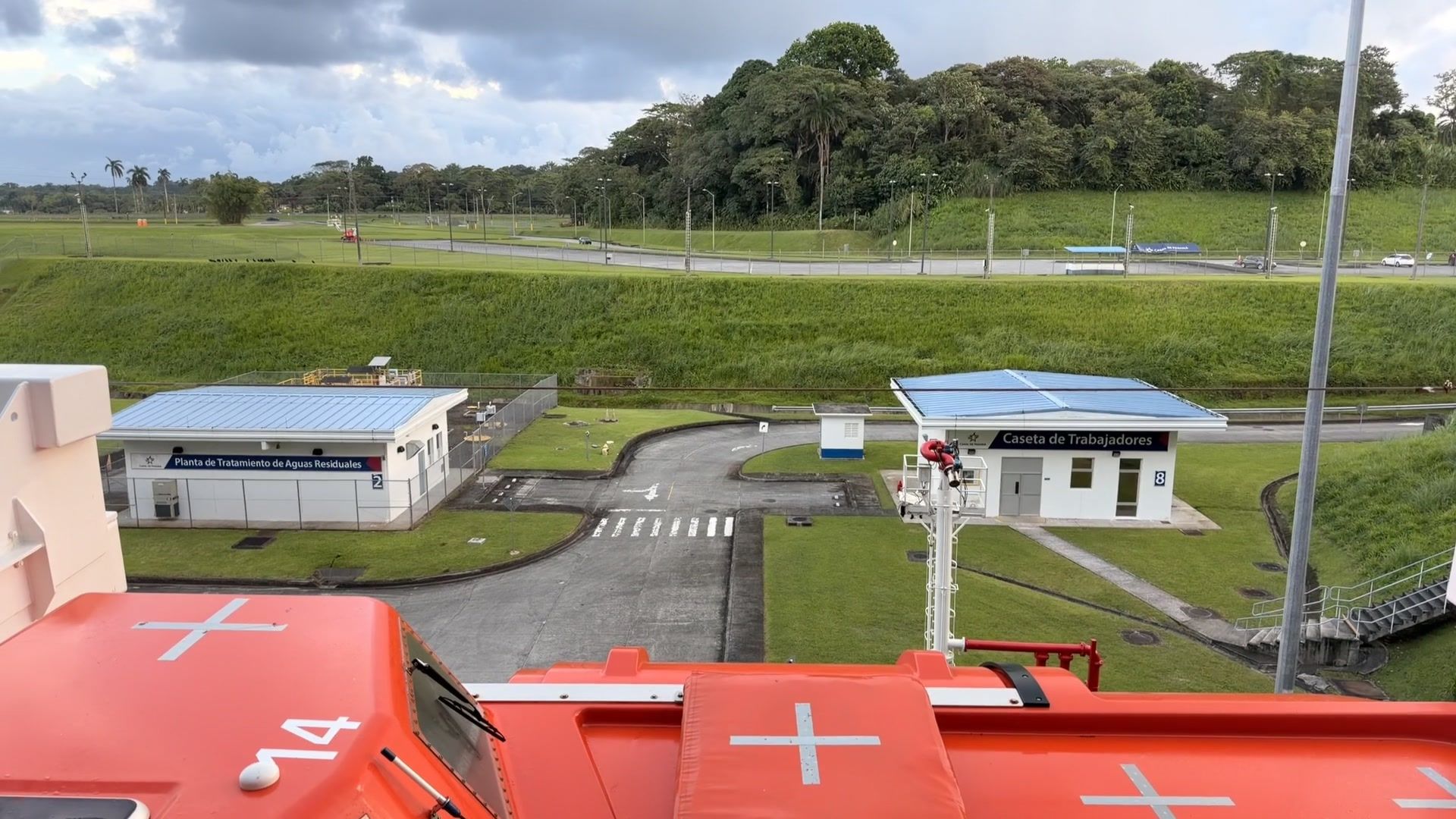
Published June 2026
The Colon cruise port sits at the Atlantic entrance to the Panama Canal, and it is unlike almost any other stop on a Caribbean itinerary. This is not a beach port. This is not a shopping port. This is a port where the main draw is one of the greatest engineering achievements in human history, and everything worth doing requires getting on a bus or booking an excursion.
I visited Colon on Holland America Line's MS Rotterdam during a partial Panama Canal transit. Our ship entered the canal from the Atlantic side, passed through the newer Agua Clara Locks (the Rotterdam is too wide for the original Gatun chambers), navigated Gatun Lake, and then exited back out rather than continuing to the Pacific. After the transit, we tendered off the ship and spent the afternoon exploring the canal locks from land before ending up at the Colon 2000 Mall next to the terminal.
If your cruise includes a Colon port call or a partial canal transit, this guide covers everything you need to know: where you'll dock, what's safe, what's worth your time, and how to make the most of a port that rewards planning more than wandering. If you're looking for my full breakdown of what a Panama Canal transit is actually like onboard, I cover that in a separate article. And if your itinerary also includes stops on the Caribbean coast of Costa Rica or in Colombia, check out my Limon cruise port guide and my Cartagena cruise port guide.
- Bottom line: Colon's value is almost entirely in its excursions, not the port itself. Plan ahead and book one.
- Not for wandering: do not walk beyond the Colon 2000 mall. Book an excursion or a licensed taxi.
- Top experience: the half-day combo of Fort San Lorenzo and the Agua Clara expansion locks.
- Canal transit: the onboard transit experience has its own full guide. This one covers the port and the land excursions.
- Money is easy: Panama uses the US dollar, so there's nothing to exchange.
- Low-key option: the Colon 2000 mall's upper balcony is a fine place to watch the ships dock.
- Colon Cruise Port Location and Map
- About the Colon Cruise Port
- Colon Cruise Port at a Glance
- Getting Around Colon from the Cruise Port
- Is Colon Safe for Cruise Passengers?
- Currency, Language, and Tips
- Fun Fact: Fort Sherman and the Jungle Warfare School
- Best Things to Do in Colon from a Cruise Ship
- Food and Drink Near the Colon Cruise Port
- Excursions from the Colon Cruise Port
- Fun Fact: The Canal Runs North to South
- Cruise Lines That Visit the Colon Cruise Port
- Colon Cruise Port Ship Schedule
- Climate, What to Wear, and When to Visit
- Colon Cruise Port Time Zone
- Sample Port Day Itineraries
- Colon Cruise Port FAQs
Colon Cruise Port Location and Map
Where Cruise Ships Dock in Colon, Panama
The Colon cruise port has two terminals: Colon 2000 and Cristobal Pier. They are about 5 km (3 miles) apart, and a taxi between them costs roughly $3. Most modern cruise ships dock at Colon 2000, the newer facility located in Manzanillo Bay near the entrance to the Panama Canal on the Caribbean Sea side.
Colon 2000 is the more developed terminal and connects directly to a duty-free shopping mall. Cristobal Pier is the older facility and has a smaller shopping area with local crafts. If your ship docks at Cristobal, you can grab a quick taxi to Colon 2000 if you want access to the larger mall and restaurants.
If your ship is doing a partial Panama Canal transit (as mine did on the Rotterdam), the docking situation is different. Your ship enters the canal, transits the locks and Gatun Lake, and then passengers tender off the ship via the ship's lifeboats to a small pier. From there, excursion buses take you to attractions before ending at Colon 2000, where the ship eventually docks.
Downtown Colon is about 1 mile (1.6 km) from the Colon 2000 terminal. That's technically walkable in about 20 minutes, but walking into downtown Colon is strongly discouraged for safety reasons (more on that below).
About the Colon Cruise Port
What to Expect at the Colon 2000 Terminal
Colon 2000 was built in 2000 as part of a $15 million investment to modernize the port. The terminal connects to a duty-free shopping mall with familiar American chain restaurants, tourist shops, a 24-hour supermarket, a casino, and basic amenities like WiFi and ATMs. There's also a Colon Free Zone nearby, the world's second-largest duty-free commercial zone (after Sanya, China), though it's primarily a wholesale operation and not particularly tourist-friendly.
The mall itself is underwhelming. There are a few familiar chain stores and tourist shops, but it is not a destination mall by any stretch. The best part is the upper balcony overlooking the water. From there, I watched our ship dock alongside a Viking cruise ship arriving at the same time. There's a large white awning and seating area where you can grab food and watch the ship activity, which is honestly more entertaining than the shopping.
When you embark or disembark, you'll pass through a duty-free shop. Outside the terminal area, local vendors set up tables selling handcrafted souvenirs, decorative plates (which seem to be a local specialty, though I'm not sure of their cultural significance), and plush animals like sloths and monkeys.
Colon Cruise Port as a Homeport
Colon also functions as a homeport. Norwegian Cruise Line signed a multi-year contract with the Panama Tourism Authority to homeport ships at both Colon and Fuerte Amador (Panama City, on the Pacific side). If you're embarking from Colon rather than just stopping for a port call, expect a more substantial terminal experience with check-in facilities and luggage processing.
Colon Cruise Port at a Glance
- Terminals: Colon 2000 (main) and Cristobal Pier (5 km apart)
- Docking: ships dock directly at the pier; partial canal transits may require tendering via the ship's lifeboats
- Distance to downtown: about 1 mile (1.6 km), walking not recommended
- WiFi: available at the terminal
- ATMs: available at Colon 2000, dispensing USD
- Currency: Panamanian Balboa (PAB) and US Dollar (USD), used interchangeably
- Language: Spanish (official); English widely spoken in tourist areas
- Key facilities: duty-free mall, restaurants, supermarket, casino, souvenir vendors
Getting Around Colon from the Cruise Port
Taxis and Transportation Near the Colon Cruise Port
Licensed tourist taxis are available right at the pier and are the recommended way to get anywhere beyond the terminal. Confirm your fare before getting in, as meters are not always used. A taxi between Colon 2000 and Cristobal Pier runs about $3. Taxis to the Gatun Locks are affordable and take about 15 to 20 minutes.
Rideshare services like Uber and Lyft have inconsistent availability near the Colon cruise port. Don't count on them. Public buses exist but are not recommended for tourists due to safety concerns and navigation challenges. For anything beyond the immediate terminal area, a guided excursion or a licensed taxi is your best option.
| Destination | Approximate fare |
|---|---|
| Colon 2000 to Cristobal Pier | ~$3 (10 minutes) |
| Colon 2000 to Gatun Locks | ~$10 to $15 (15 to 20 minutes) |
| Colon 2000 to Portobelo | ~$60 to $80 round trip (1 hour each way) |
Licensed tourist taxis wait at the pier. Meters are not always used, so agree on the fare before you get in. Prices are approximate and should be confirmed before departure. For destinations farther from the port, an organized excursion is often the better value.
Why Walking in Colon Is Not Recommended
Colon is Panama's second-largest city, but the areas immediately surrounding the cruise terminal are gritty, industrial, and residential. Walking beyond the Colon 2000 Mall area is strongly discouraged by virtually every cruise line, travel advisory, and experienced cruiser. Stick to the terminal complex if you're not on a tour, and save your exploring for the organized excursions that take you to the canal locks, forts, and rainforest.
Pro Tip
Do not walk beyond the Colon 2000 mall area. This is consistent advice from cruise lines, local guides, and experienced travelers. Book an excursion or hire a licensed taxi, and confirm the fare before you get in.
Is Colon Safe for Cruise Passengers?
I'm going to be direct: Colon has a reputation, and it's earned. The city itself has a higher crime rate than other parts of Panama, and the areas outside the cruise terminal are not places you want to wander on foot. That said, the Colon 2000 terminal and mall area are secure, and the excursion destinations (the canal locks, Fort San Lorenzo, Portobelo) are safe with a guide or licensed taxi.
On my visit, I noticed the contrast immediately. The terminal area felt contained and tourist-friendly, but the surrounding streets looked rough. Barbed wire topped some of the fences near the port. The gritty, industrial feel is hard to miss, and it's a stark difference from the lush rainforest and historic forts you'll see on excursions.
The universal advice from cruise lines, local guides, and experienced travelers is the same: do not walk independently beyond the mall area. Book an excursion, hire a licensed taxi, or stay within the Colon 2000 complex. If your ship has a short call and you just want to stretch your legs, the mall and its upper balcony overlooking the water are a perfectly fine way to spend a couple of hours.
For longer calls, the excursions are where the real value is. The canal locks, the rainforest, the UNESCO forts: these are the reasons Colon is on your itinerary, and they're all reached safely through organized tours. This is very different from ports like Bonaire or Grand Cayman, where you can wander freely and explore on your own. Colon rewards planning. Consider picking up travel insurance before your cruise for extra peace of mind, especially if you're exploring independently in any port.
Currency, Language, and Tips for the Colon Cruise Port
What Currency to Use in Colon, Panama
Panama uses two currencies interchangeably: the Panamanian Balboa (PAB) and the US Dollar (USD). The Balboa is pegged 1:1 to the dollar, and Panama only mints coins (which are the same size and value as US coins and accepted everywhere). All paper currency in circulation is US dollars. You do not need to exchange money.
ATMs at Colon 2000 dispense US dollars. Credit cards are accepted at the terminal, hotels, and most tour operators. If you're carrying a travel credit card with no foreign transaction fees, you're set. For small vendor purchases outside the terminal, cash is preferred.
Language at the Colon Cruise Port
Spanish is the official language of Panama, but English is widely spoken in tourist areas, at the cruise terminal, and by most tour guides and taxi drivers serving the port. You won't have trouble communicating at Colon 2000 or on organized excursions. Limonese Creole is also spoken in parts of the Caribbean coast, reflecting the region's Afro-Caribbean heritage.
Tipping in Colon, Panama
Tipping is appreciated but not always expected. For tour guides, 10% to 15% of the excursion cost is a good guideline. Taxi drivers don't typically expect tips, but rounding up is a nice gesture. Restaurant tips of 10% are standard if service isn't already included in the bill.
Fun Fact: Fort Sherman and the Jungle Warfare School Near Colon
The U.S. Military's "Green Hell" Training Center in Panama
We drove through Fort Sherman on our excursion, and it was one of the most unexpectedly memorable parts of the day. The buildings and barracks are largely abandoned and deteriorating, giving the area a slightly eerie, dystopian feel. At the same time, it sits on beautiful beachfront property, and locals now park nearby and walk down to the beach for recreation. The contrast between the decaying military structures and everyday local life was striking.
Fort Sherman was built in 1912 as the primary Atlantic-side defense for the Panama Canal. But its most fascinating chapter came later. Starting in 1951, the U.S. Army operated the Jungle Operations Training Center (JOTC) here, nicknamed "Green Hell." The program trained roughly 9,000 soldiers per year in jungle warfare, drawing troops from the U.S. and allied Central American armies. The terrain in Panama was similar to Vietnam, making Fort Sherman a critical training ground during that era.
Fort Sherman closed in 1999 when the U.S. handed the canal and surrounding military bases back to Panama, per the 1977 Carter-Torrijos Treaty. The base's 23,100 acres are now mostly tropical forest. Shelter Bay Marina operates on part of the old base, and the area also served as a filming location for the James Bond film Quantum of Solace (2008). If your excursion passes through here, keep an eye out for the crumbling barracks and overgrown roads. It's an unexpectedly powerful stop.
Best Things to Do in Colon from a Cruise Ship
Agua Clara Locks and Visitor Center Near the Colon Cruise Port
The Agua Clara Visitor Center is the most popular excursion from the Colon cruise port, and for good reason. This is where you can see the new expansion locks (opened in 2016) that allow massive Neo-Panamax container ships to transit the canal. These ships carry up to 12,000 containers, compared to 5,000 in the original locks. The viewing platforms offer panoramic 360-degree views of ships passing through, and there's a short educational film, interactive displays, a restaurant, a coffee shop, and a gift shop.
I visited Agua Clara on a cruise line excursion. The viewing platforms were the highlight, especially being able to spot our own ship after it exited the locks. That said, we stayed longer than I wanted to, which is exactly the kind of thing that reinforces why I generally prefer independent excursions over cruise line excursions. Once I've seen something and understood it, I'm ready to move on.
Sendero Tropical Nature Trail Near the Colon Cruise Port
Near the Agua Clara Visitor Center, there's a short rainforest trail called the Sendero Tropical del Atlantico. It's a manageable walk with gravel footing, some steps, and mild elevation changes. I was wearing flip flops, which was not ideal but manageable if you're careful. For older cruisers or anyone with mobility concerns, sneakers or closed-toe shoes are definitely a better idea.
We didn't see wildlife on the trail itself, but it was a welcome chance to stretch our legs after sitting on a bus. During the bus ride, though, we spotted monkeys in the trees, and our driver pulled over so everyone could take photos. If you're hoping for wildlife sightings, keep your eyes on the trees during the drive, not just the trail.
Pro Tip
Wear closed-toe shoes or sneakers for Fort San Lorenzo and the Sendero Tropical trail. I wore flip flops and managed, but the gravel, steps, and inclines really call for proper shoes. And keep your eyes on the trees during the drive, because that's where we spotted monkeys, not on the trail.
Fort San Lorenzo: UNESCO World Heritage Site Near Colon
Fort San Lorenzo is one of the most impressive Spanish colonial fortifications in the Americas and a UNESCO World Heritage Site. Built in the late 1500s to defend the entrance to the Chagres River, this cliff-top fortress was repeatedly attacked by pirates, most famously by Sir Henry Morgan in 1671. The stone walls, cannons, tunnels, and breathtaking views over the Caribbean Sea are worth the trip.
Fort San Lorenzo is about an hour's drive from the port through rainforest, and it's often combined with a visit to the Agua Clara Locks on half-day excursions. The drive itself is part of the experience, passing through the San Lorenzo Protected Forest and sometimes through Fort Sherman's abandoned grounds.
Portobelo from the Colon Cruise Port: Spanish Forts and the Black Christ
Portobelo is a small coastal town about an hour from Colon with an outsized place in history. Founded in 1597 as San Felipe de Portobelo, it served as the main Caribbean port for Spanish treasure fleets carrying gold and silver from South America to Spain. The town has five Spanish colonial forts (also UNESCO-listed), including Fort Santiago de la Gloria and Fort San Jeronimo, plus the beautifully restored Royal Customs House (Aduana Real).
Portobelo was sacked repeatedly by pirates, including Francis Drake and Henry Morgan. Today, it's a quiet town of fewer than 3,000 people, but it comes alive every October 21 for the Festival of the Black Christ, a massive pilgrimage to the Iglesia de San Felipe, which houses El Cristo Negro (the Black Christ), a revered wooden statue. If your cruise falls near that date, this is a once-in-a-lifetime cultural experience.
The Portobelo National Park surrounding the town offers rainforest, beaches, coral reefs, and some of the best snorkeling and diving on Panama's Caribbean coast.
Watching Ships Transit the Gatun Locks Near Colon
The Gatun Locks are the original locks on the Atlantic side of the Panama Canal, operational since 1914. You can watch ships transit the locks from viewing areas with bleacher seating, and there's a small-scale model of the entire canal system to help you understand the engineering.
I visited the lock viewing areas after my ship had already transited the canal. Having experienced the locks onboard (watching the water rise around our ship from my balcony), it was fascinating to then watch other vessels enter, rise, and exit from this completely different perspective. Seeing ships slowly rise from below eye level to above it reinforced how precise and controlled the process is. Again: not exciting, but genuinely fascinating from an engineering standpoint. I go deep on the onboard experience in my Panama Canal cruise guide.
Gatun Lake Eco-Cruises and Kayaking Near Colon
Gatun Lake is one of the largest artificial lakes in the world, created by damming the Chagres River during construction of the Panama Canal. The lake is surrounded by rainforest and filled with channels and small islands, making it a prime spot for eco-cruises and kayaking. Wildlife sightings are common: howler monkeys, capuchin monkeys, iguanas, sloths, and over 366 species of birds, including toucans.
Embera Indigenous Village Experience from the Colon Cruise Port
One of the more unique excursion options from Colon is a visit to an Embera indigenous village. These tours typically include a bus ride to the Chagres River, followed by a dugout canoe trip to the village. The Embera people have maintained many of their traditional practices, and visits include traditional dances, cultural demonstrations, body painting with jagua dye, and the chance to purchase handmade crafts directly from the artisans.
Panama City Day Trip from the Colon Cruise Port
If your ship has a longer call, a day trip to Panama City is possible but tight. The drive is about an hour each way, and traffic can be unpredictable. Major stops include the Miraflores Locks Visitor Center (the Pacific-side canal locks), the historic Casco Viejo neighborhood, the Frank Gehry-designed BioMuseo, and the modern skyline with views from Ancon Hill.
Fair warning: this is a long day with a lot of time on a bus. If your ship departs in the late afternoon, the timing can feel rushed. I'd only recommend a Panama City day trip if your ship is in port for 8+ hours and you're booking through a reputable tour operator who understands the ship schedule. Missing the ship from an hour away is not a situation you want to be in. Make sure you have travel insurance if you're cutting it close.
Panama Canal Railway from the Colon Cruise Port
The Panama Canal Railway was the first transcontinental railroad in the world (completed in 1855) and runs 47.6 miles between Colon and Panama City in about an hour. The vintage dome cars feature luxurious wood paneling, carpeted floors, and large windows with views of the canal, Gatun Lake, and surrounding rainforest.
Important update: Maersk purchased the Panama Canal Railway in April 2025, and tourist service is now primarily limited to cruise ship bookings and organized tours. Independent travelers may not be able to purchase tickets directly. If this excursion interests you, check with your cruise line or a tour operator for current availability.
Food and Drink Near the Colon Cruise Port
Where to Eat at the Colon 2000 Terminal
I'm going to level with you: Colon is not a food destination for cruisers. The eating options at Colon 2000 are limited to what's in the mall, which includes a few American chain restaurants and basic food court options. We ate at a wing place on the upper balcony, and while the food itself wasn't notable, the setting was great. Sitting under the white awning, watching our ship dock while a Viking ship pulled in beside it, was genuinely enjoyable.
If you're on a longer excursion, the Agua Clara Visitor Center has a restaurant and coffee shop. Your options will depend largely on which excursion you book and whether it includes a meal stop.
Panamanian Food to Try Near the Colon Cruise Port
Even if the mall food is underwhelming, Panama's Caribbean coast has one of the most interesting culinary identities in Central America. The Colon province specifically reflects the Afro-Caribbean heritage of Jamaican and Barbadian workers who came to build the Panama Canal. Their influence shows up in dishes heavy on coconut milk, seafood, and spices. If you find a local restaurant on an excursion stop, the food is worth exploring.
The dish most specific to Colon is rondon (sometimes spelled rondón), an Afro-Panamanian seafood soup made with coconut milk, fish or mixed seafood, green plantains, yuca, and bell peppers. If you've been to Jamaica, you might recognize it: Jamaican workers brought the dish (called "run-down" in Jamaica) to Panama during canal construction, and it evolved into its own thing. Rondon is traditionally a Sunday dish in Colon, meant to be shared with family, and it's one of those regional specialties that locals are proud of.
Ceviche is everywhere in Panama, and the coastal location of Colon means the seafood is fresh. Panamanian ceviche is typically made with corvina (white sea bass) or mixed seafood, marinated in lime juice with onions, cilantro, and peppers. It's often served with little salty crackers called soditas. You'll also find habanero on nearly every table in Panama, so you can dial up the heat as much as you want.
Patacones (twice-fried green plantains) are a staple across Panama and the perfect side dish or snack. They're sliced, fried once, smashed flat, and fried again until crispy on the outside and tender inside. You'll see them served alongside almost everything. Carimañolas are another must-try: torpedo-shaped yuca fritters stuffed with seasoned beef, chicken, or cheese and deep-fried. They're commonly eaten for breakfast or as a snack, and they're excellent.
Empanadas (stuffed pastries), hojaldres (puffy fried dough typically served at breakfast with cheese or honey), and yuca fries round out the street food scene. Panama also does tamales wrapped in banana leaves rather than corn husks, filled with chicken, vegetables, olives, and sometimes raisins. They're bigger and heartier than Mexican tamales.
If you have a sweet tooth, look for plantintas. This pastry is specifically traditional to the Caribbean coast around Colon. The dough is made from ripe plantains and flour, filled with lemon-flavored cream, and baked. It's somewhere between a cake and an empanada, and it reflects the Afro-Caribbean baking traditions of the region. You're more likely to find these from local vendors or bakeries than at the mall.
Panama grows some of the best coffee in the world, particularly from the Boquete region in the western highlands. If you see Panamanian coffee on a menu or at a gift shop, grab some. It's genuinely excellent. For something more traditional, chicheme is a Panamanian drink made from corn, milk, cinnamon, and sugar, served cold. And if you want something stronger, seco herrerano is Panama's national liquor, a triple-distilled sugarcane spirit that's smoother than rum and usually mixed into cocktails with fruit juice.
Excursions from the Colon Cruise Port
Cruise Line vs. Independent Excursions in Colon
Colon is one of the ports where booking through the cruise line has real advantages over going independent. The main attractions (canal locks, forts, rainforest) are all outside the city, the safety situation makes independent wandering impractical, and the logistics of tendering during a partial canal transit can make independent planning tricky. I'm usually a strong advocate for independent exploration, but Colon is a legitimate exception.
That said, third-party tour operators on Viator and GetYourGuide offer comparable excursions, often at lower prices and with smaller group sizes. If your ship docks directly at Colon 2000 (rather than tendering during a partial transit), you'll have more flexibility to book independently.
Top Colon Cruise Port Excursions on Viator
Here are some of the most popular and well-reviewed excursions from the Colon cruise port:
Related Tour: Rainforest, Fort San Lorenzo and Canal Expansion Locks (half-day), the most popular option, combining Fort San Lorenzo, the Agua Clara Locks, and a drive through the rainforest. This is the excursion I'd recommend for first-time visitors who want the best overview of what makes Colon special.
Related Tour: Portobelo and Beaches, a half-day trip to the UNESCO-listed colonial forts in Portobelo with optional beach time at nearby Caribbean beaches in the national park.
Related Tour: Panama City Full-Day Tour with Miraflores Locks, for ships with longer port calls. This tour covers the Pacific-side Miraflores Locks, Casco Viejo, and Panama City's modern skyline. Budget a full day.
Related Tour: Embera Indigenous Village Experience, a cultural immersion including a dugout canoe ride, traditional dances, and handmade crafts. Unique to the Panama region.
Related Tour: Gatun Lake Eco-Cruise and Wildlife Adventure, for wildlife lovers and anyone who wants to get out on the water. Monkeys, sloths, toucans, and rainforest canopy from the lake.
You can also browse all Colon cruise port tours on Viator.
If you're new to cruising and want more help deciding between cruise line excursions and independent options, my post on the pros and cons of cruise line excursions versus independent ones breaks down everything you need to know. You can also book a trip with my travel agency if you want help planning your cruise itinerary from start to finish, or if you've been thinking about becoming a travel agent yourself, I have info on that too.
Fun Fact: The Panama Canal Runs North to South, Not East to West
Why the Panama Canal Near Colon Runs the "Wrong" Direction
Here's something that catches almost everyone off guard: the Panama Canal doesn't run east to west. It runs roughly north to south. If you look at a map, Panama curves in such a way that the Atlantic (Caribbean) entrance to the canal is actually northwest of the Pacific entrance. That means when a ship enters the canal from the Caribbean side at Colon, it's heading southeast toward the Pacific, not west.
This also produces a fun geography quirk: the sun rises over the Pacific Ocean and sets over the Atlantic Ocean in the Canal Zone. It's the kind of fact that sounds wrong until you look at a map and realize Panama's isthmus runs more or less east to west, but the canal cuts through it at an angle. As a nerd who loves these kinds of details, I was delighted when our onboard narrator mentioned this during the transit.
Cruise Lines That Visit the Colon Cruise Port
Colon is a common stop on Caribbean and Panama Canal itineraries for most major cruise lines, including Holland America, Norwegian Cruise Line, Royal Caribbean, Princess Cruises, Celebrity Cruises, Carnival, and several luxury lines like Seabourn and Windstar. Norwegian has also used Colon as a homeport for Panama Canal roundtrip sailings. Many ships visiting Colon are doing partial or full Panama Canal transits as part of longer Caribbean, repositioning, or transatlantic itineraries.
Colon Cruise Port Ship Schedule
The Colon cruise port receives ships year-round, with peak traffic during the cruise season from October through April. You can check the current ship schedule on CruiseMapper's Colon port page for exact dates, arrival and departure times, and which ships are in port on any given day.
Climate, What to Wear, and When to Visit the Colon Cruise Port
Weather and Best Time to Visit Colon, Panama
Colon has a tropical monsoon climate, which means it's hot and humid year-round with temperatures typically ranging from 77 to 86°F (25 to 30°C). There's very little temperature variation between seasons. The difference is rainfall: the dry season runs from December to April (less humidity, more sunshine, your best bet), while the wet season from May to November brings heavy rain, especially in October and November.
February is the driest month, averaging only about 53mm of rainfall. November is the wettest, with some sources reporting over 350mm. If your cruise is during the wet season, expect afternoon downpours that can be intense but often pass quickly. Bring a packable rain jacket regardless of when you visit.
What to Wear at the Colon Cruise Port
Light, breathable clothing is essential. Colon is hot and oppressively humid, so moisture-wicking fabrics will keep you more comfortable than cotton. If you're planning an excursion to Fort San Lorenzo or the nature trail near Agua Clara, wear closed-toe shoes or sneakers. I wore flip flops on the nature trail and it was manageable, but I wouldn't recommend it, especially for the gravel paths and steps.
Sunscreen and bug spray are both important. The rainforest excursions will expose you to mosquitoes, and the viewing platforms at the canal locks have minimal shade. If you're still planning your cruise, grab my free cruise packing list and planning guide before you go. You can also find my recommended travel gear (including sunscreen and bug spray) in my Amazon storefront.
Seasonal Cruise Crowd Strategy for the Colon Cruise Port
Peak cruise season in Colon runs from October through April. The busiest months are typically December through March, when multiple ships may be in port on the same day. If you have flexibility in choosing excursions, the Agua Clara Locks tend to be the most popular (and therefore most crowded) option. Fort San Lorenzo and Portobelo draw fewer cruisers and offer a quieter experience.
If your ship is doing a partial canal transit, your excursion timing is largely dictated by the ship's transit schedule. For direct port calls at Colon 2000, earlier excursions generally mean smaller crowds at the locks and forts.
Colon Cruise Port Time Zone
Colon is in Eastern Standard Time (EST, UTC-5) year-round. Panama does not observe daylight saving time, so the time stays consistent regardless of when you visit. During the North American summer, when the Eastern US shifts to EDT (UTC-4), Panama will be one hour behind the US East Coast.
Your ship may or may not adjust to local time, depending on your itinerary. Always check the ship's daily newsletter for the current ship time and compare it to the local time listed for your excursions. Being an hour off in Colon could mean missing your tender back to the ship.
Sample Port Day Itineraries for the Colon Cruise Port
Itinerary 1: Canal and Fort Highlights (Half-Day)
Theme: history and engineering.
- 9:00 AM: depart port by excursion bus.
- 9:45 AM: arrive at Fort San Lorenzo. Explore the cliff-top Spanish fortress, walk the stone walls, see the cannons and tunnels. (about 1 hour)
- 11:00 AM: drive to the Agua Clara Visitor Center, passing through Fort Sherman and the San Lorenzo Protected Forest.
- 11:30 AM: Agua Clara Visitor Center. Watch ships transit the new locks from the viewing platforms, see the educational film, walk the Sendero Tropical nature trail. (about 1.5 hours)
- 1:00 PM: lunch at the Agua Clara restaurant or return to the Colon 2000 Mall for food.
- 2:00 PM: browse the Colon 2000 Mall, watch ship activity from the upper balcony.
- 3:00 PM: back onboard.
Approximate cost: $80 to $120 per person (excursion), plus lunch.
Itinerary 2: Portobelo and Caribbean History (Half-Day)
Theme: UNESCO forts and pirate history.
- 9:00 AM: depart port by taxi or excursion (about 1 hour drive to Portobelo).
- 10:00 AM: explore Portobelo: Fort Santiago de la Gloria, Fort San Jeronimo, Royal Customs House, Iglesia de San Felipe (Black Christ). (about 2 hours)
- 12:00 PM: optional beach time or snorkeling in Portobelo National Park. (about 1 hour)
- 1:00 PM: drive back to Colon 2000.
- 2:00 PM: lunch at the Colon 2000 Mall, souvenir shopping.
- 3:00 PM: back onboard.
Approximate cost: $60 to $100 per person (excursion or taxi), plus lunch and any park fees.
Itinerary 3: Wildlife and Rainforest Adventure
Theme: nature and wildlife.
- 8:30 AM: depart for a Gatun Lake eco-cruise or kayaking tour.
- 9:30 AM: boat or kayak through Gatun Lake channels. Watch for howler monkeys, capuchin monkeys, sloths, toucans, and iguanas. (about 2 to 2.5 hours)
- 12:00 PM: return to the port area. Optional quick stop at the Gatun Locks viewing area. (about 30 minutes)
- 1:00 PM: lunch at the Colon 2000 Mall.
- 2:00 PM: browse shops, relax on the upper balcony.
- 3:00 PM: back onboard.
Approximate cost: $70 to $110 per person (eco-cruise), plus lunch.
Itinerary 4: Budget-Friendly Day at the Colon Cruise Port
Theme: low cost, low stress.
- Morning: take a taxi to the Gatun Locks ($10 to $15). Watch ships transit the original 1914 locks from the viewing area. See the scale model of the canal. (about 1 to 1.5 hours)
- Late morning: taxi back to Colon 2000 ($10 to $15).
- Afternoon: browse the duty-free mall, grab lunch on the upper balcony, watch ships dock, pick up souvenirs from the local vendors.
Approximate cost: $25 to $40 per person (taxi fares), plus lunch. No excursion booking needed.
Itinerary 5: Panama City Day Trip (Long Day)
Theme: big city, big canal views.
- 7:30 AM: depart Colon by excursion bus (about 1 hour drive to Panama City).
- 8:30 AM: Miraflores Locks Visitor Center. Watch ships transit the Pacific-side locks, museum, rooftop viewing deck. (about 1.5 hours)
- 10:30 AM: drive to Casco Viejo (Old Town). Walk the cobblestone streets, see colonial architecture, churches, and plazas. (about 1.5 hours)
- 12:00 PM: lunch in Casco Viejo.
- 1:00 PM: optional BioMuseo, Amador Causeway, or Ancon Hill viewpoint. (about 1 hour)
- 2:00 PM: drive back to Colon (about 1 hour, traffic dependent).
- 3:30 PM: back onboard (cutting it close).
Approximate cost: $100 to $150 per person (full-day excursion), plus lunch. Only recommended for ships in port 8+ hours.
If you're new to cruising and want a complete primer before your trip, my Ultimate Guide to Cruising covers everything you need to know from booking to disembarkation.
Colon Cruise Port FAQs
Is Colon worth visiting on a cruise?
Yes, but with a major caveat: Colon's value is almost entirely in its excursions, not the port itself. If you book a trip to the canal locks, Fort San Lorenzo, Portobelo, or the rainforest, you'll have a genuinely memorable and unique port day. If you stay at the terminal, you'll have a couple hours of mall time and not much else. Plan ahead, book an excursion, and Colon rewards you with experiences you can't get anywhere else on a Caribbean itinerary.
How long do cruise ships stay in Colon?
It varies significantly depending on whether your ship is doing a partial canal transit or a standard port call. Partial transit days can last most of the day (your ship enters the canal early morning and may not dock at Colon until the afternoon). Standard port calls typically give you 6 to 8 hours in port. Check your cruise itinerary for exact times, and you can verify the schedule on CruiseMapper's Colon port page.
Can you walk around Colon from the cruise port?
You can walk around the Colon 2000 terminal and mall area safely. Walking into downtown Colon or beyond the immediate port complex is not recommended due to safety concerns. For anything outside the terminal, use a licensed taxi or book an organized excursion. This is consistent advice from cruise lines, travel guides, and local operators.
Do I need to exchange money in Colon, Panama?
No. Panama uses the US Dollar alongside the Panamanian Balboa (which is pegged 1:1 to the dollar). All paper currency is USD, and Panamanian coins are interchangeable with US coins. ATMs at the port dispense dollars. If you're carrying US cash or a credit card, you're all set.
What is the best excursion from the Colon cruise port?
For first-time visitors, the half-day combination of Fort San Lorenzo and the Agua Clara Locks is the best overall value. You get a UNESCO-listed Spanish fortress, panoramic views of mega-ships transiting the new canal locks, a rainforest drive, and possibly a glimpse of Fort Sherman's abandoned military base. It covers the history, the engineering, and the natural beauty that make Colon worth visiting.
Disclosure: This post contains affiliate links, which means I may earn a small commission if you book or buy through them, at no extra cost to you.
BABY, LET'S CRUISE...
Let us help you plan the cruise (or trip) of a lifetime!
Subscribe to my Cruiseletter
Get juicy cruise info, insider tips, and FREE port guides, delivered straight to your inbox. Plus, you'll get my FREE Cruise Packing List & Planner, and I promise to never spam you.
By submitting this form, you're agreeing to receive emails from Professor Melissa. Don't worry, your info is safe with me. We'll never share or sell it. You can also unsubscribe at any time.