Is Cruising Safe for Kids? An Honest Look
Jun 06, 2026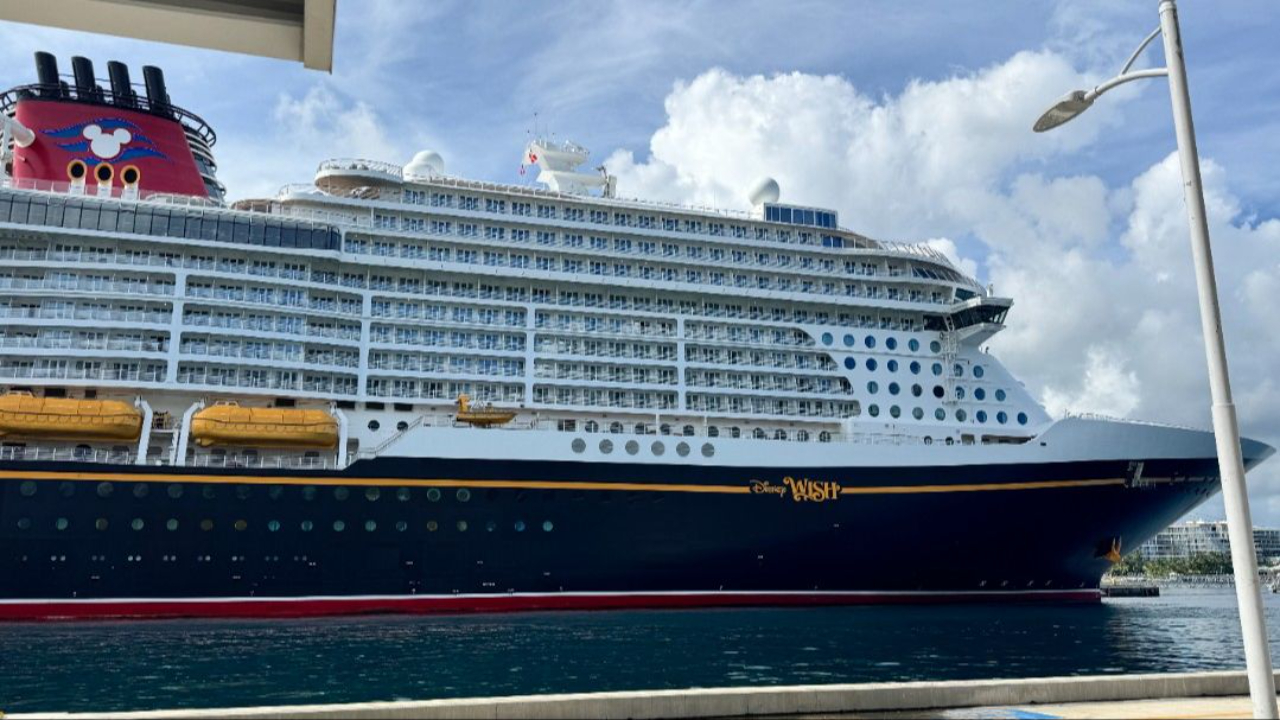
Published June 2026
Why Every Cruising Parent Is Asking This Right Now
Something is happening on cruise ships right now that every parent in this community needs to hear about. Not because I want to scare you, but because you deserve the actual information rather than just the headline.
Federal agents boarded a Disney cruise ship in San Diego and walked crew members off in handcuffs. That footage went viral. And if you saw it and felt a pit in your stomach, I understand that. But here is what I want to do: give you the full picture, connect it to other cases most people are not linking together, and by the end give you my honest answer to the question every cruising parent is quietly carrying right now. Is it actually safe to bring your kids on a cruise? I think the honest answer is more useful than a simple yes or no.
I'm Melissa, a university professor who loves to cruise and who loves to talk ship.
- Yes, cruising is safe for kids, with the same eyes-open awareness you bring anywhere your children are around adults they do not know.
- Recent enforcement spanned multiple ships and lines, not one brand, and the most important case involved a passenger, not crew.
- The safe bubble feeling is real, but leaning into it too hard makes us less present than we would be at home.
- Your most effective protection is an informed parent who is paying attention.
- These stories are not a reason to cancel, they are a reason to board prepared.
Operation Tidal Wave
Let's start with San Diego, because this is the story driving the conversation. Between April 23rd and April 27th, U.S. Customs and Border Protection boarded eight cruise ships at the Port of San Diego as part of a federal enforcement operation. On April 28th, Homeland Security Investigations made additional arrests under the same operation. They named it Operation Tidal Wave.
CBP says that of 28 crew members interviewed across those ships, 27 were determined to have been involved in the receipt, possession, transportation, distribution, or viewing of child sexual abuse material. The operation was built on tips from the National Center for Missing and Exploited Children.
Ten of those crew members were working aboard the Disney Magic. Passengers watched federal officers escort uniformed employees off the vessel. One passenger told reporters she had been at breakfast with one of those crew members about 45 minutes before he was in handcuffs. Disney confirmed a very small number of their crew were among those detained and stated the company has a zero-tolerance policy. They cooperated fully.
Disney made the headlines because of what the brand promises families. But this was not a Disney problem. Multiple ships, multiple cruise lines. And I want you to hold onto that, because the most important child safety case from the past year on a cruise ship did not involve crew at all.
The bigger picture
Operation Tidal Wave did not come out of nowhere. In July 2024, three former Carnival Cruise Line employees were arrested at a cruise terminal in New Orleans after federal investigators found child sexual abuse material on their devices. Unlike San Diego, those men were charged in federal court and sentenced in 2025, one to 12 months and one day in federal prison and another to 18 months with sex offender registration.
There is also a separate situation unfolding in Norfolk, Virginia, where reporting and migrant-rights advocates have raised serious due process concerns about crew members being deported without being shown evidence or given access to legal counsel, and I would encourage you to look into that story on its own terms.
What all of it tells us is a pattern of enforcement and reported incidents the cruise industry can no longer treat as isolated. And there is a number that I think reframes everything. According to reporting on a 2013 congressional report, up to one third of reported cruise ship sexual assaults involved minors. Not a small fraction. On ships marketed to families as the safest vacation they will ever take. Up to one third.
I want to hold there for a second, because that number is the heart of why I wanted to write this.
The case that changes the frame
Now, the case I flagged at the top. In October 2025, a federal jury convicted a passenger, not a crew member, a fellow guest, of sexually assaulting a child during a Royal Caribbean sailing. The Justice Department announced the conviction the following month. The crime happened aboard the Icon of the Seas, on a sailing out of Miami. The man encountered two boys, ages seven and nine, playing in a corridor outside their stateroom. He walked up to them, started a conversation, and assaulted the seven-year-old before walking away.
The boys were in a hallway. Outside their cabin. On a ship with cameras on every deck. And that is where it happened.
The U.S. Attorney on the case said it plainly: abusing a child is an unforgivable act. This verdict makes clear that anyone who preys on a child, anywhere and under any flag, will be held to account.
Most parents, when they think about child safety on a cruise ship, are thinking about crew. Background checks, staff vetting, what happens inside Kids Club. Those things matter and I am not dismissing them. But this was another passenger. Someone who bought a ticket and boarded the exact same ship your family would be on. That is a different kind of vulnerability, and it is exactly why the safe bubble idea is worth looking at directly.
The safe bubble
There is a feeling almost every parent who has cruised knows. You get on board, settle in, and somewhere in the first day or two you think: I might be the most relaxed I have ever been on a family vacation. The ship is enclosed. There is nowhere for kids to disappear to. Cameras are everywhere. Staff are visible on every deck. It really does feel different from a beach town or a theme park, where a child could vanish into a crowd in thirty seconds.
That feeling is not wrong. Cruise ships are controlled environments, and for the overwhelming majority of families, everything goes exactly as it should.
But here is my thing about the safe bubble. When we lean into it too hard, it makes us slightly less present than we would be at home, and we usually do not notice it happening. It makes us send a kid down the hall alone without a second thought. It makes us assume that because cameras are everywhere, nothing can happen in front of them. The Icon of the Seas case is a direct answer to that assumption.
A cruise ship does not suspend parental awareness. It is a good environment for families, and I say that as someone who has spent a lot of time on ships. But it still requires the same eyes-open presence you bring everywhere else. So let me give you something concrete to do with that.
What you can actually do
Have the conversation with your kids before you board, not the morning of, not the night before, but before the trip. They need to understand that no adult, regardless of their uniform or title, should ever ask them to go somewhere alone or keep something secret from their family. I say before because once you are on board, surrounded by new things and embarkation day energy, that conversation is harder to have and less likely to land the way you need it to.
When your kids check into Kids Club, go in with them. Introduce yourself to whoever is working that session, learn a name or two, and let the staff see your face. Do the same thing at pickup. Know who is handing your child back to you and make sure they know who you are. The reason most parents skip this is exactly why they should not: the ship has already done an excellent job of making everything feel warm and handled. That feeling is precisely why you still need to do it anyway.
Pay close attention to corridors and elevators, and the Icon case is exactly why. Two boys in a hallway does not look like a dangerous situation. That is just kids on a ship. But the transitions between the pool and the cabin, between dinner and the room, between one deck and another, are where kids are most isolated from the people who know them. Build the habit of either accompanying younger kids on those transitions or knowing exactly where older ones are headed and when to expect them back.
Use whatever family communication tools your cruise line actually provides, and set them up on embarkation day before you go anywhere else. These vary quite a bit by ship, so check before you sail rather than assuming every app works the same way. What matters most is having a plan for staying in contact before you need one, not while you are already trying to find someone.
If your kids are old enough to explore independently, settle two things before they go: where to find help if something feels wrong, and the clear understanding that coming to you with something uncomfortable will never get them in trouble. That second part matters more than most parents expect. Kids do not report things when they anticipate panic or blame as the response, and the most important thing you can do is make sure they know that will not be you.
If Something Feels Off
Report it immediately. Not after you think it over, not after you decide whether you maybe misread the situation. Ships sailing from U.S. ports are legally required to report certain crimes to the FBI. The infrastructure is there for exactly this reason. Use it without hesitation.
Is cruising safe for kids? Here is my honest answer
Yes, with the same eyes-open awareness you would bring to any environment where your children are around adults they do not know. Not fearful. Not hovering. Just present. The version of yourself that pays attention at school pickup, at youth sports practice, anywhere you are extending reasonable trust to other people while still keeping your own eyes open.
I will say this plainly: the cruise industry needs to do more. More rigorous vetting, more consistent standards, more transparency about how incidents are handled. The federal enforcement we are seeing, when it is done with proper due process, is the system working. But enforcement after the fact is not a substitute for prevention, and I think the industry knows that.
The most effective protection your kids have on any ship is an informed parent who is paying attention. These stories are not a reason to cancel your family cruise. They are a reason to board it the way you approach everything else that matters: eyes open, ready, and with the same quiet presence you carry everywhere you love your kids.
Cruising With Kids: Safety FAQ
Is it safe to take kids on a cruise?
Yes, with the same eyes-open awareness you would bring to any place your children are around adults they do not know. Cruise ships are controlled environments and for the overwhelming majority of families everything goes exactly as it should. The most effective protection is an informed parent who stays present.
What was Operation Tidal Wave?
It was a federal enforcement operation in which U.S. Customs and Border Protection boarded eight cruise ships at the Port of San Diego between April 23rd and 27th, with additional arrests by Homeland Security Investigations on April 28th. CBP said that of 28 crew members interviewed, 27 were determined to have been involved with child sexual abuse material.
How can parents keep kids safe on a cruise?
Have the safety conversation before you board, walk into Kids Club with your child and learn the staff names, pay attention to transitions through corridors and elevators, set up your line's family communication tools on day one, and make sure kids know that coming to you with something uncomfortable will never get them in trouble.
Are cruise ships required to report crimes?
Ships sailing from U.S. ports are legally required to report certain crimes to the FBI. If something happens or something feels off, report it immediately rather than waiting to decide whether you misread the situation. The infrastructure exists for exactly that reason.
Should I still book a family cruise?
These stories are not a reason to cancel your family cruise. They are a reason to board it prepared, with the same quiet, eyes-open presence you bring everywhere your kids are. Cruising remains a good environment for families when parents stay informed and present.
Before any family sailing, make sure you have the right coverage. Read my cruise travel insurance guide.
Disclosure: This post may contain affiliate links, which means I may earn a small commission if you book through them, at no extra cost to you. Thank you for supporting Professor Melissa!
BABY, LET'S CRUISE...
Let us help you plan the cruise (or trip) of a lifetime!
Subscribe to my Cruiseletter
Get juicy cruise info, insider tips, and FREE port guides, delivered straight to your inbox. Plus, you'll get my FREE Cruise Packing List & Planner, and I promise to never spam you.
By submitting this form, you're agreeing to receive emails from Professor Melissa. Don't worry, your info is safe with me. We'll never share or sell it. You can also unsubscribe at any time.